Nick Ervinck, GNI-RI jul2026, Echoes of a line
Date: 01/07/2026 - 31/08/2026
Hours: Tuesday → Sunday 11AM → 5PM
Free entry

VOORWOORD
De kerkruimte van K.E.R.K. is voor mij nooit een neutrale tentoonstellingsplek geweest.
Ze draagt geschiedenis, symboliek, stilte en collectief geheugen in zich. Elke interventie die ik hier maak, gaat daarom niet alleen over sculptuur, maar ook over de spanning tussen een eeuwenoude architectuur en de wereld waarin we vandaag leven.
Voor deze editie vertrek ik vanuit de lijn.
De meest elementaire vorm van tekenen, denken en construeren. Een lijn kan verbinden, ordenen en structureren, maar ook ontsporen, muteren en weerstand oproepen. In mijn praktijk ontstaat die lijn digitaal: als een groeiend spoor zonder zwaartekracht, zonder materiaal, zonder beperking. Maar in K.E.R.K. wordt diezelfde lijn fysiek. Ze kruipt door de ruimte, hangt boven het hoofd van de bezoeker en transformeert de architectuur tot een netwerk van spanningen en verbindingen.
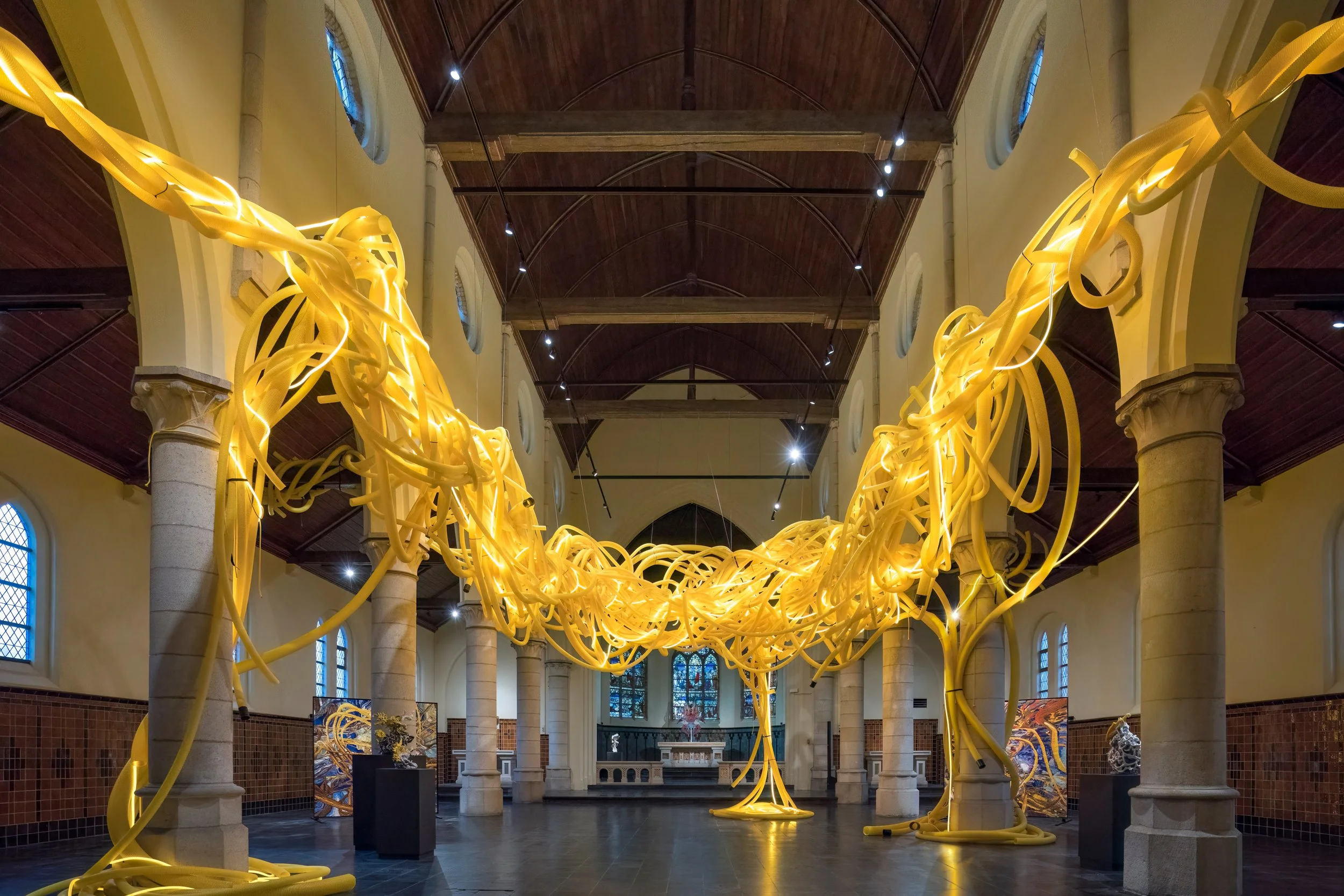
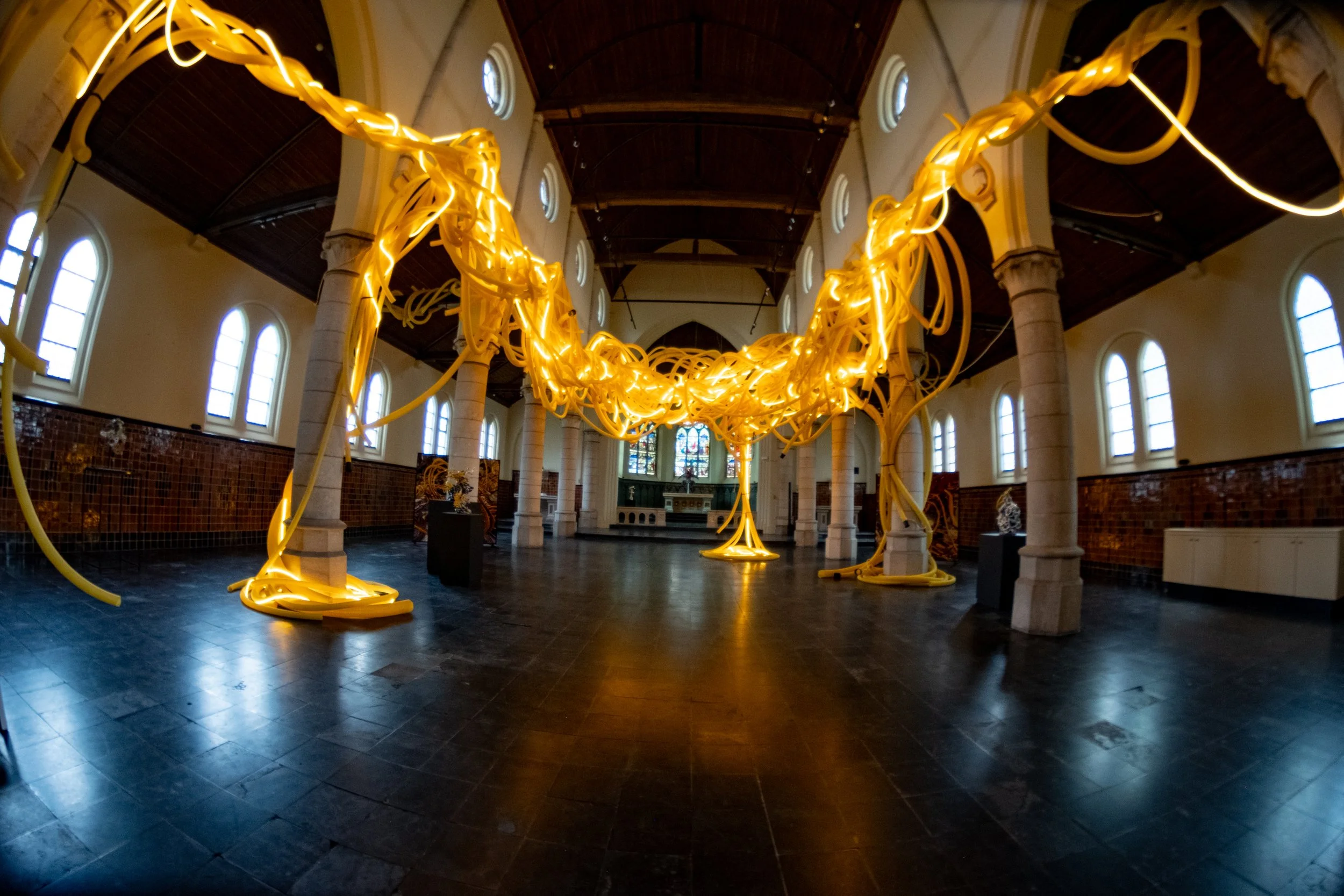
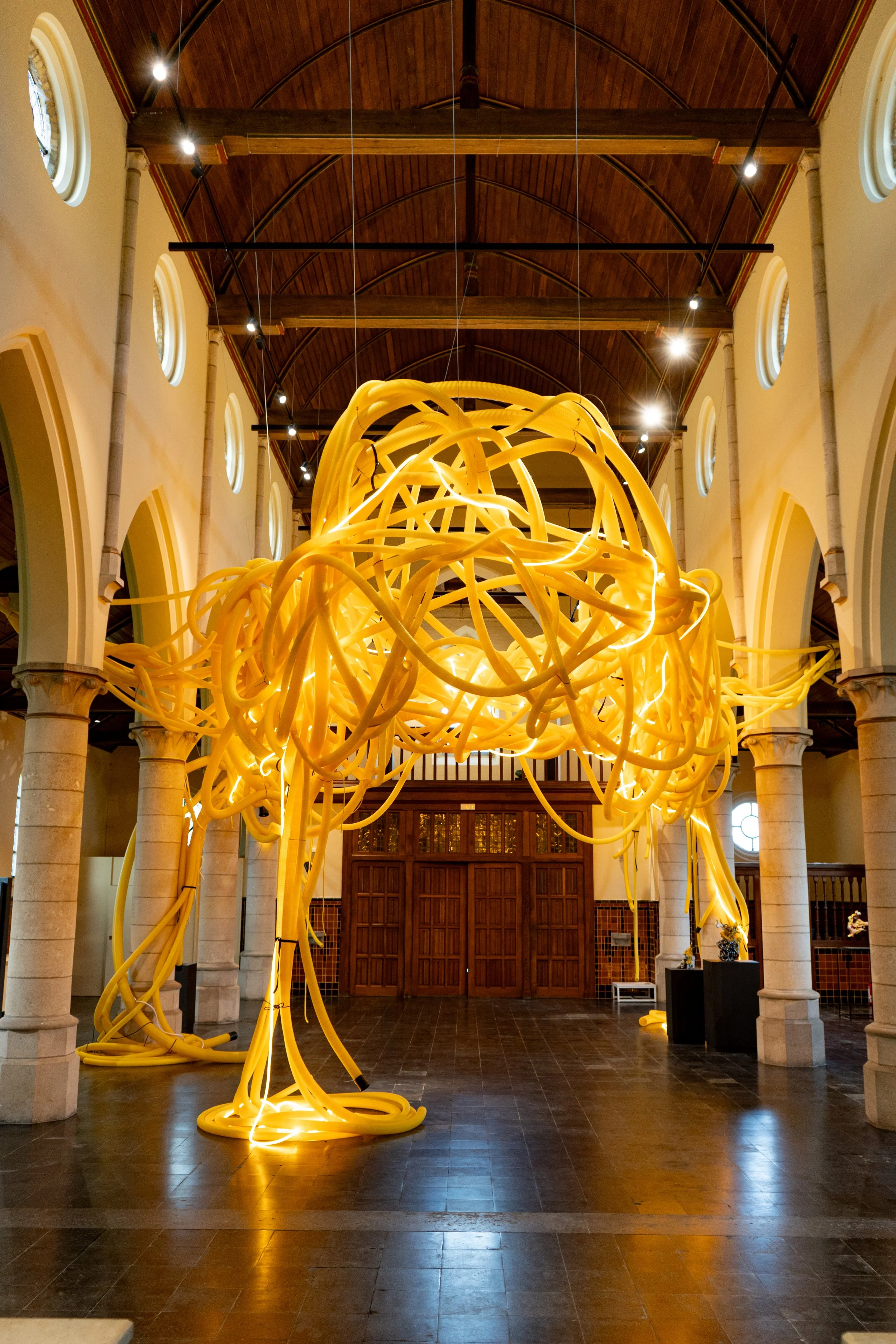
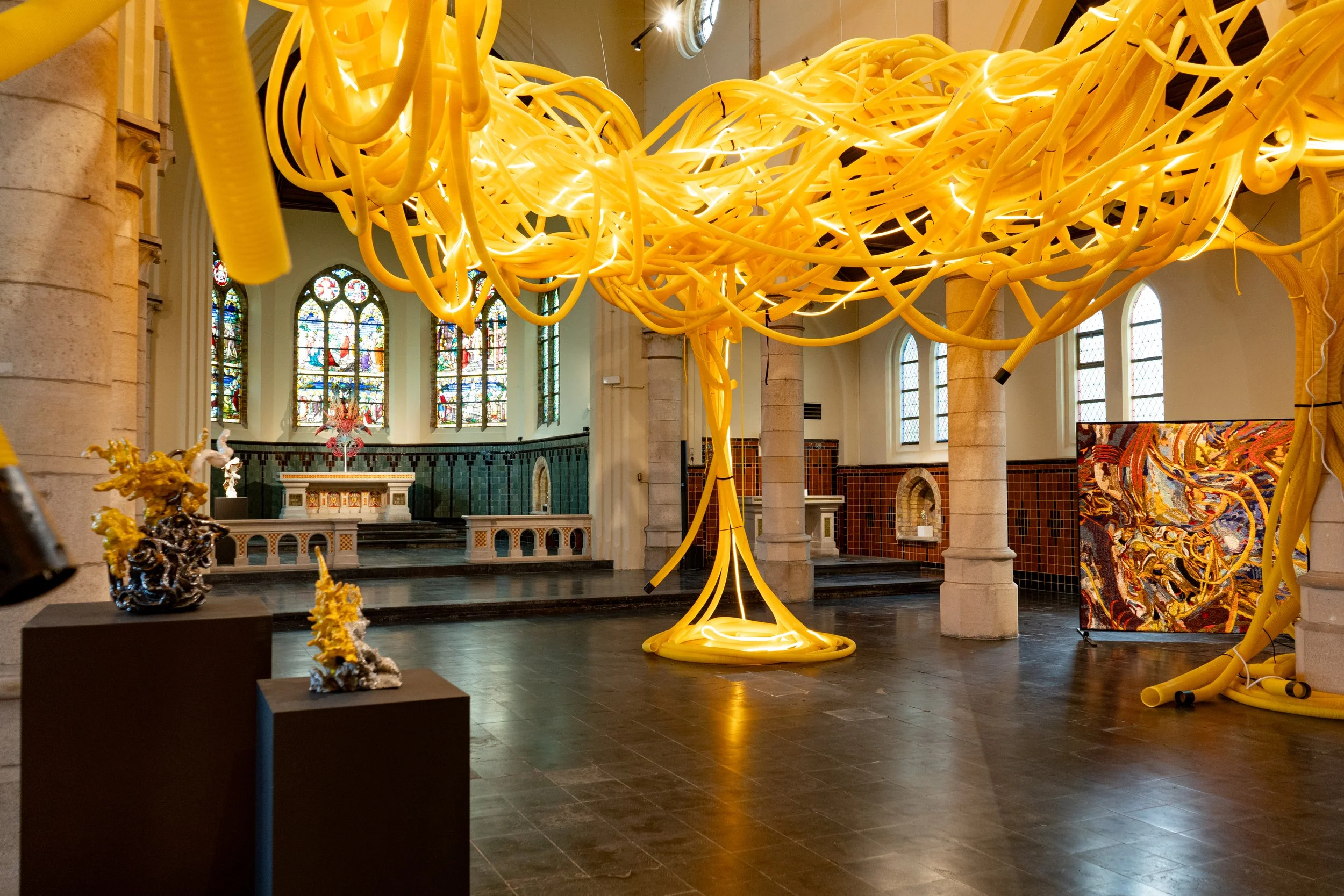
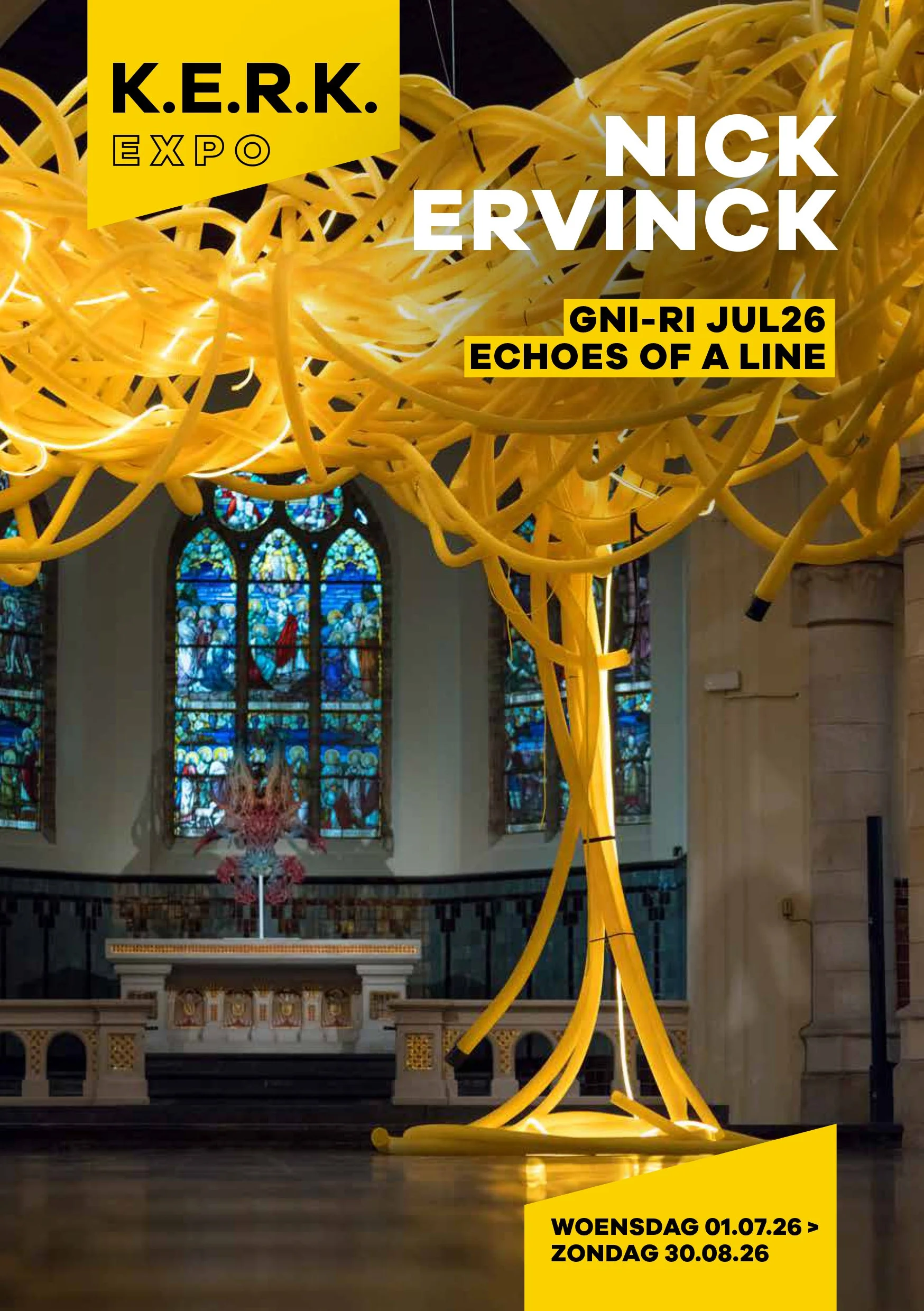
De monumentale installatie van gele drainagebuizen vormt het hart van deze tentoonstelling.
Het zijn materialen die normaal verborgen blijven onder de grond — puur functioneel, bedoeld om water af te voeren en systemen draaiende te houden. Hier worden ze zichtbaar, sculpturaal en zelfs dominant aanwezig. Ze lijken infrastructuur, maar weigeren uiteindelijk elke duidelijke logica. Wat ontstaat, is geen gesloten systeem maar een landschap van beweging, frictie en onzekerheid.
Die spanning fascineert me.
We leven vandaag in een wereld die volledig wordt gedragen door netwerken: digitale systemen, economische structuren, ecologische ketens, algoritmes en data. Ze organiseren ons leven, maar blijven grotendeels onzichtbaar. Met Echoes of a Line wil ik die onderliggende structuren tastbaar maken. Niet als illustratie van technologie, maar als een fysieke ervaring waarin de bezoeker zich letterlijk moet verhouden tot lijnen, druk, complexiteit en controleverlies.
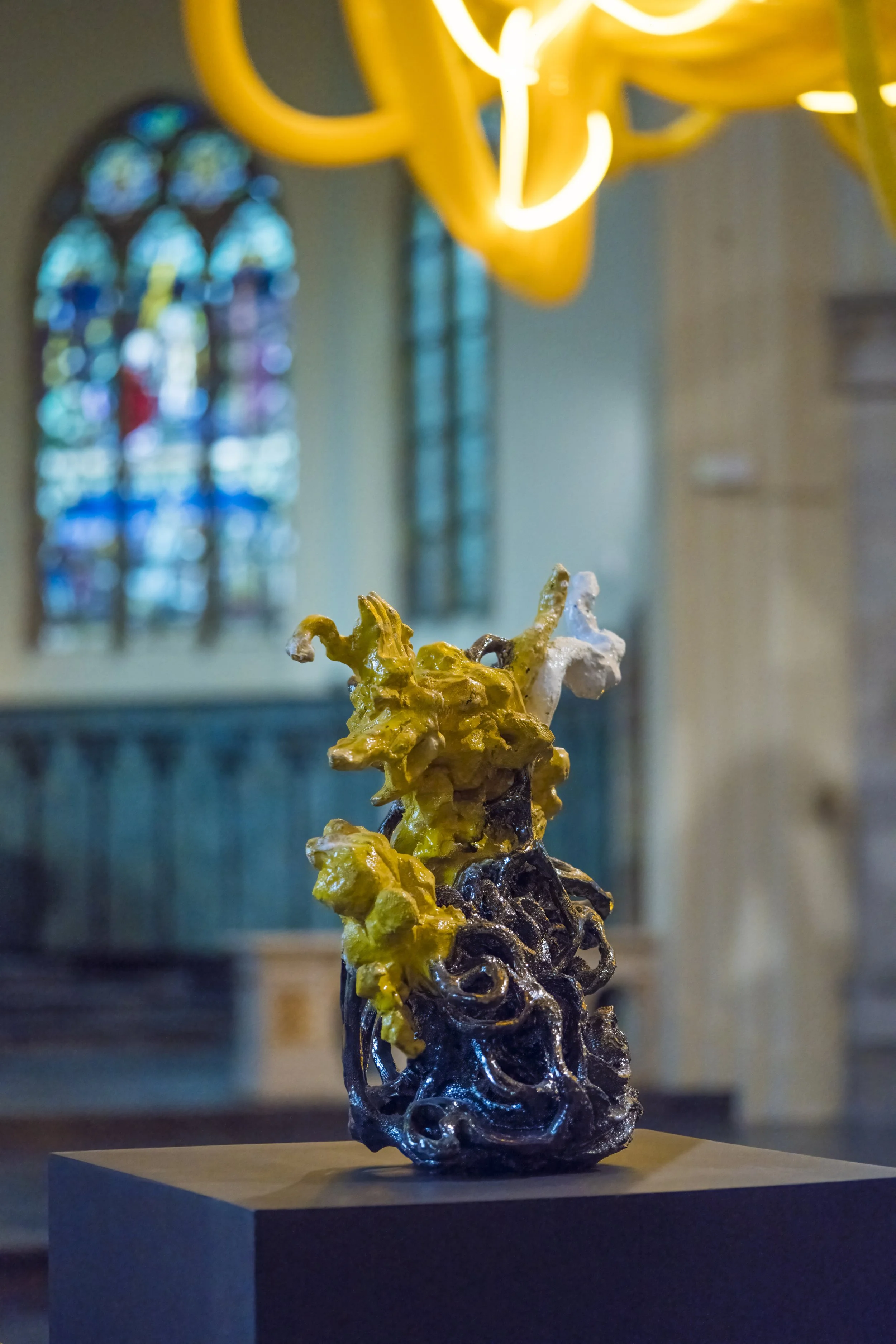
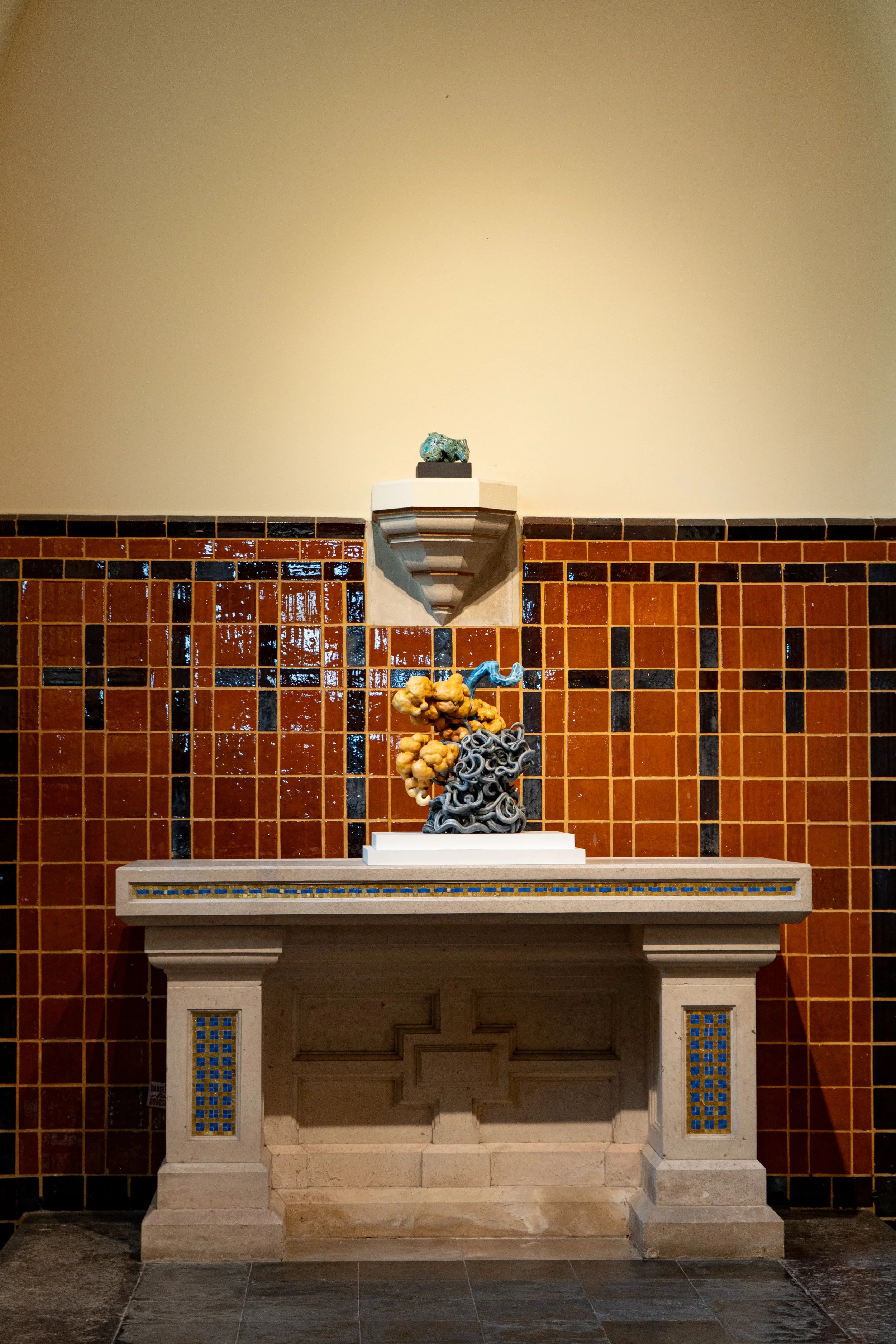
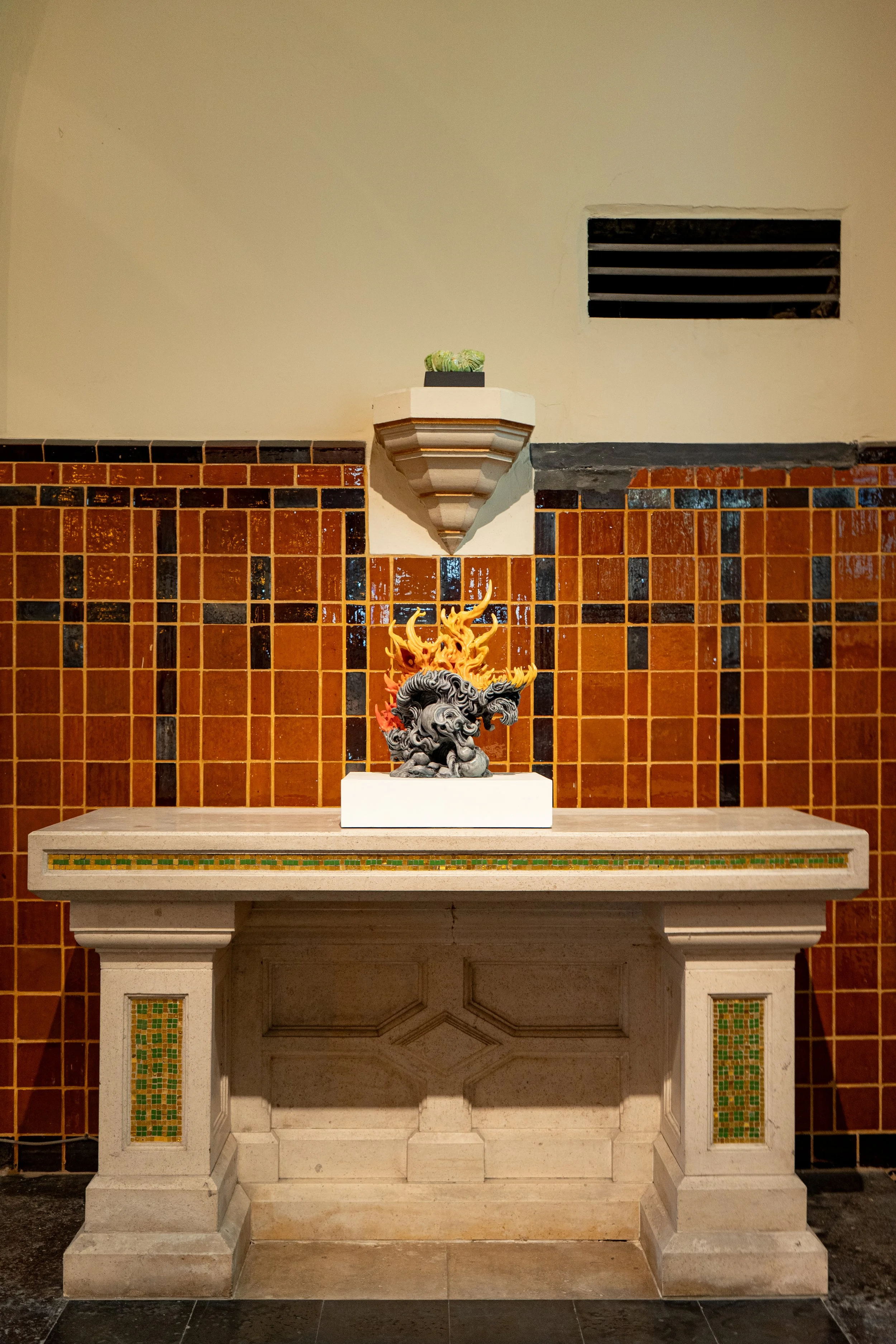
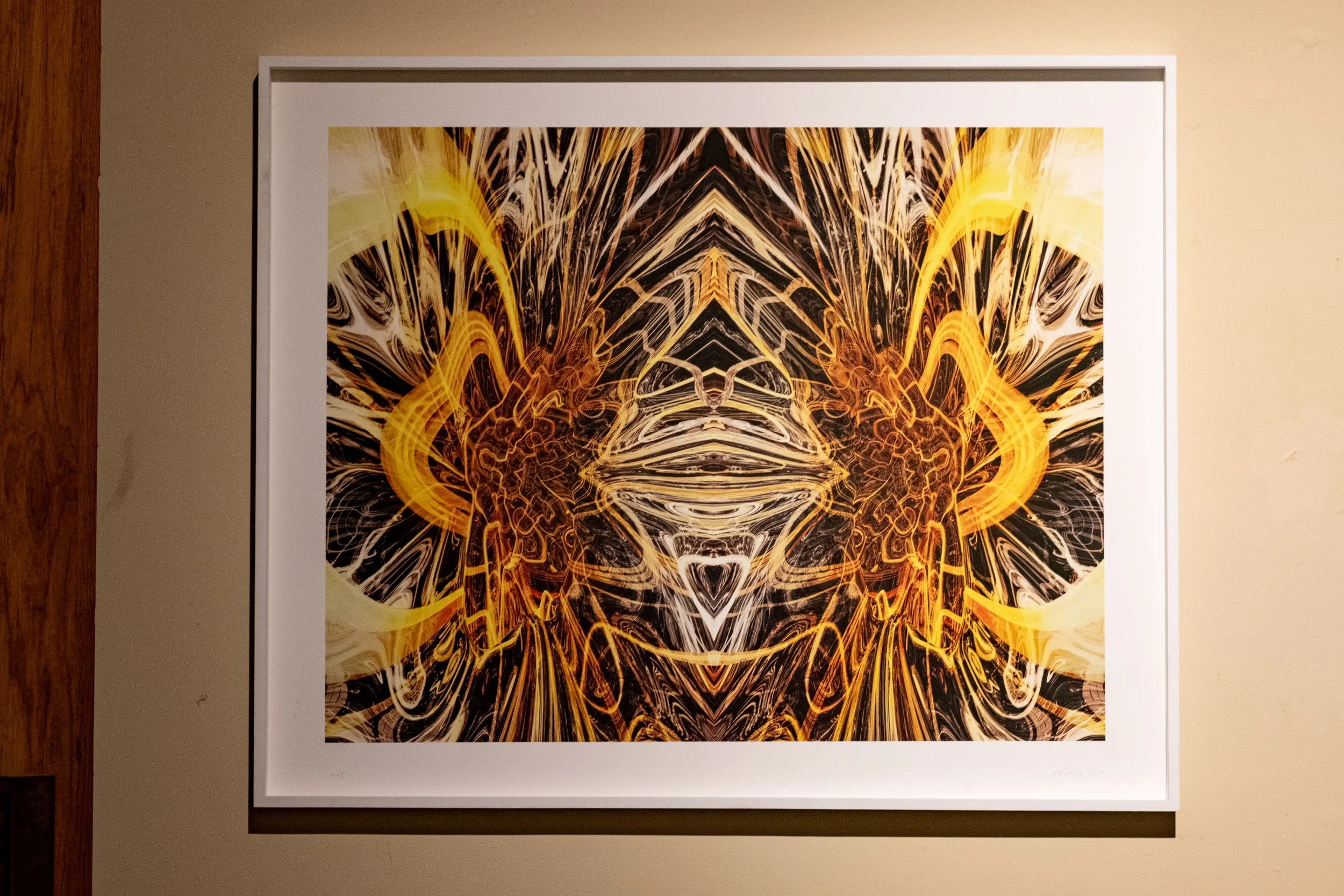
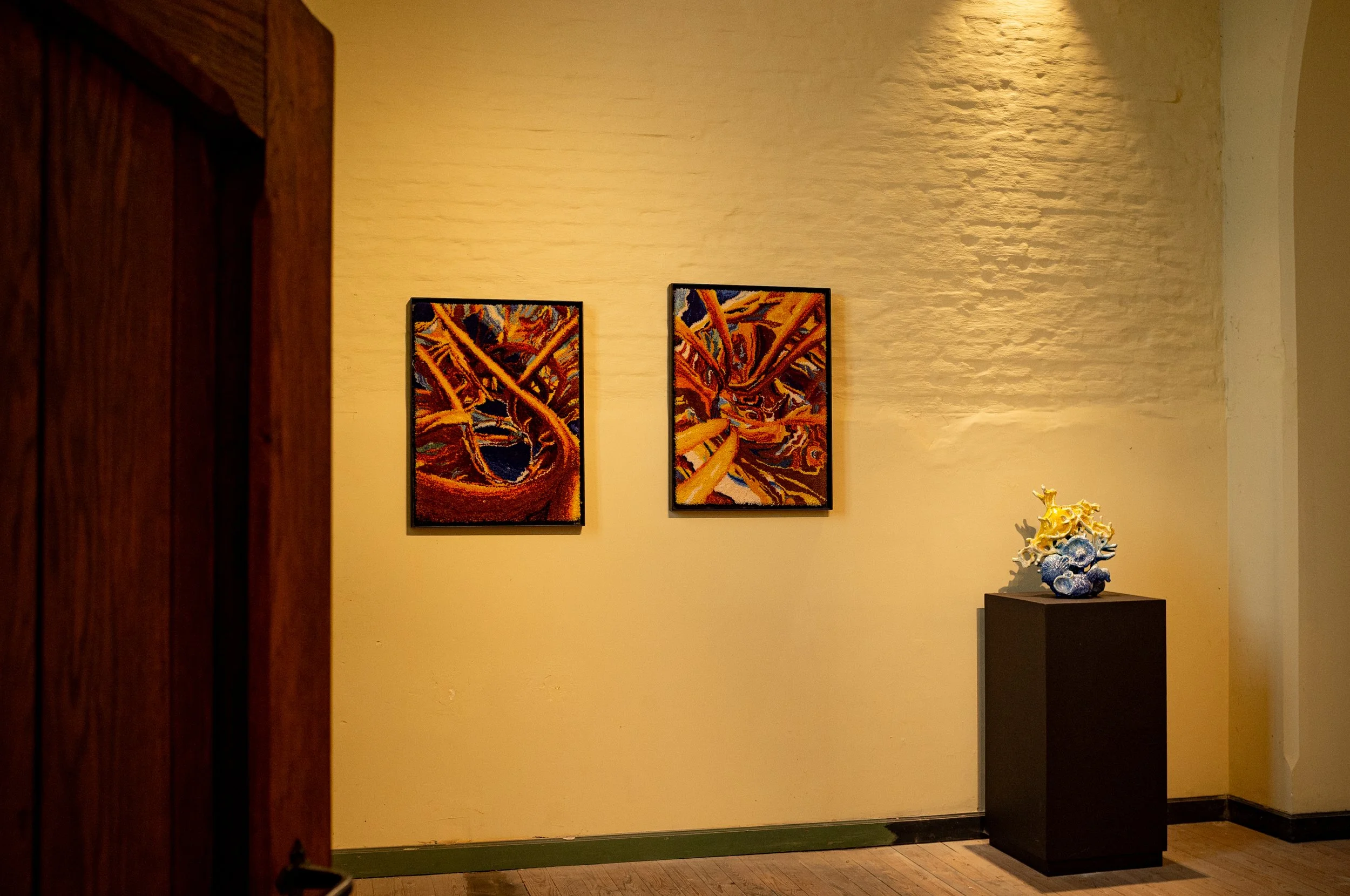
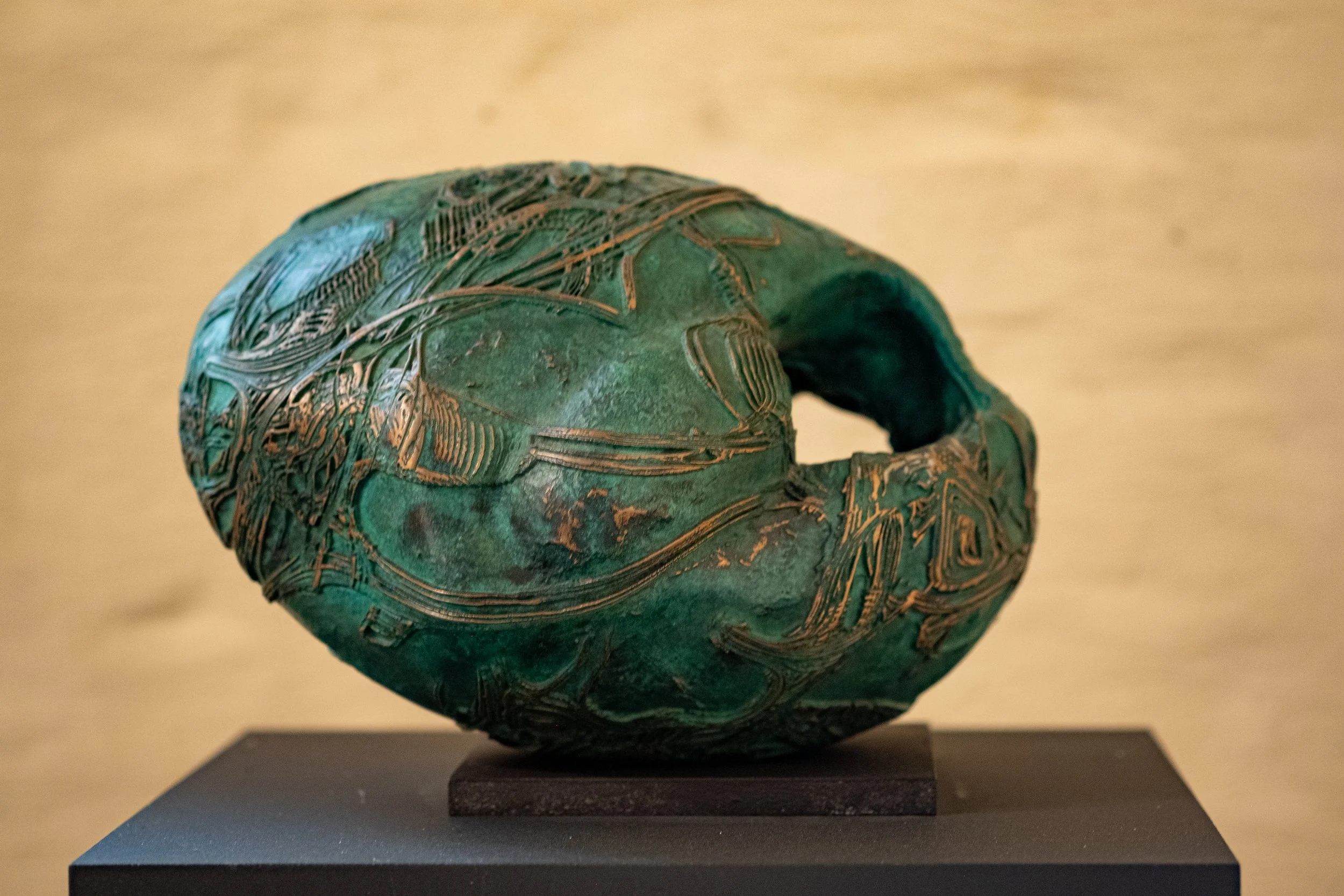
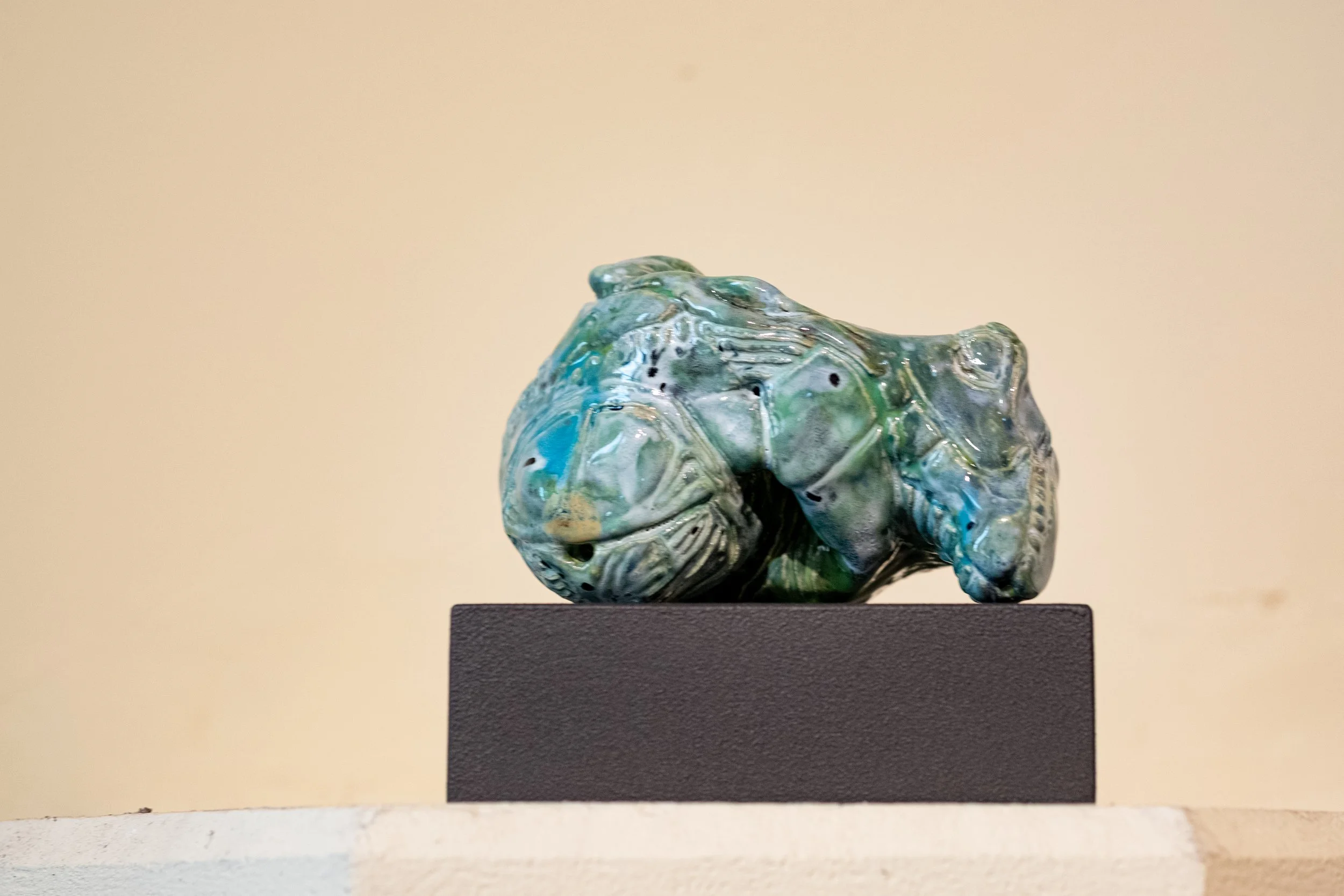
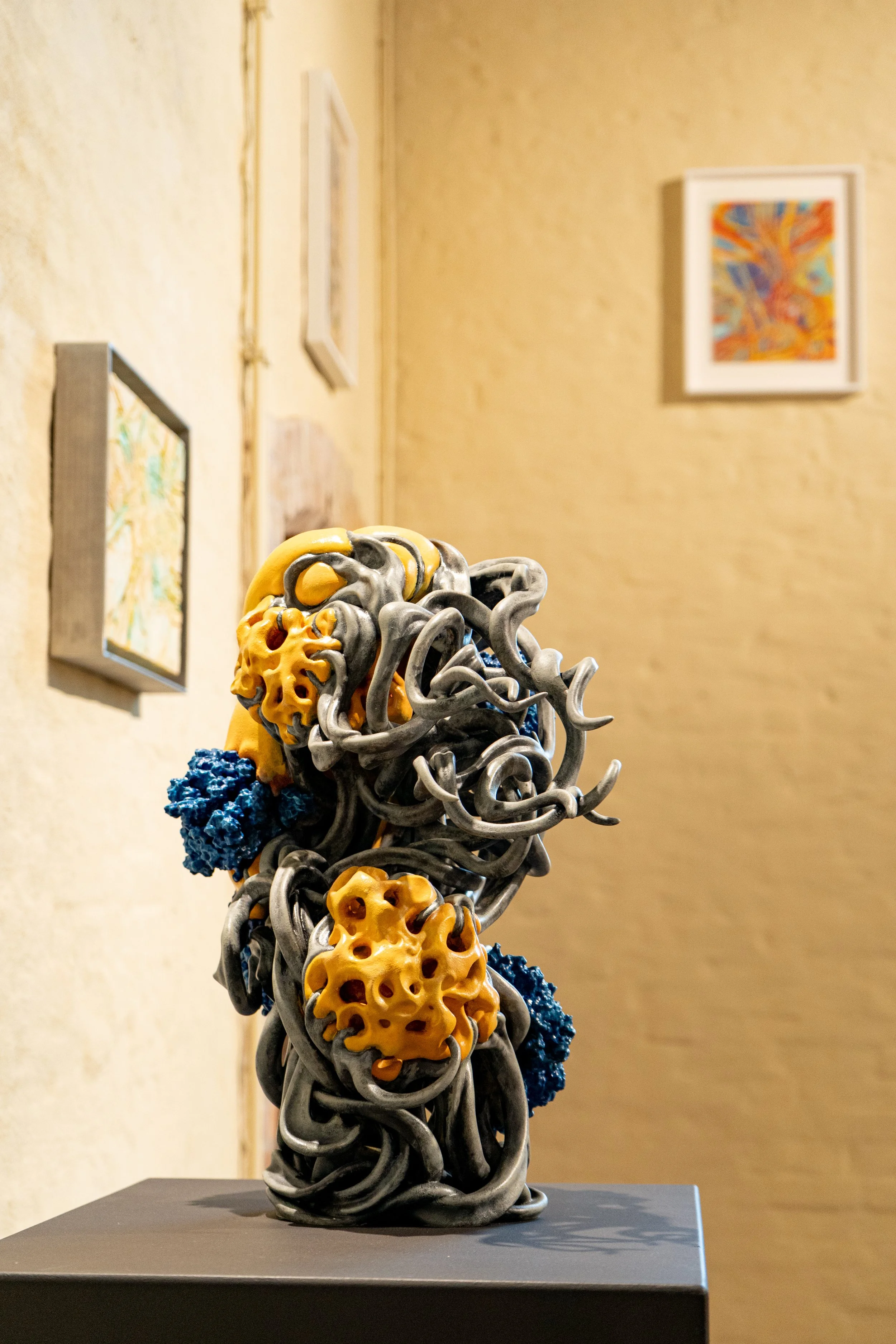
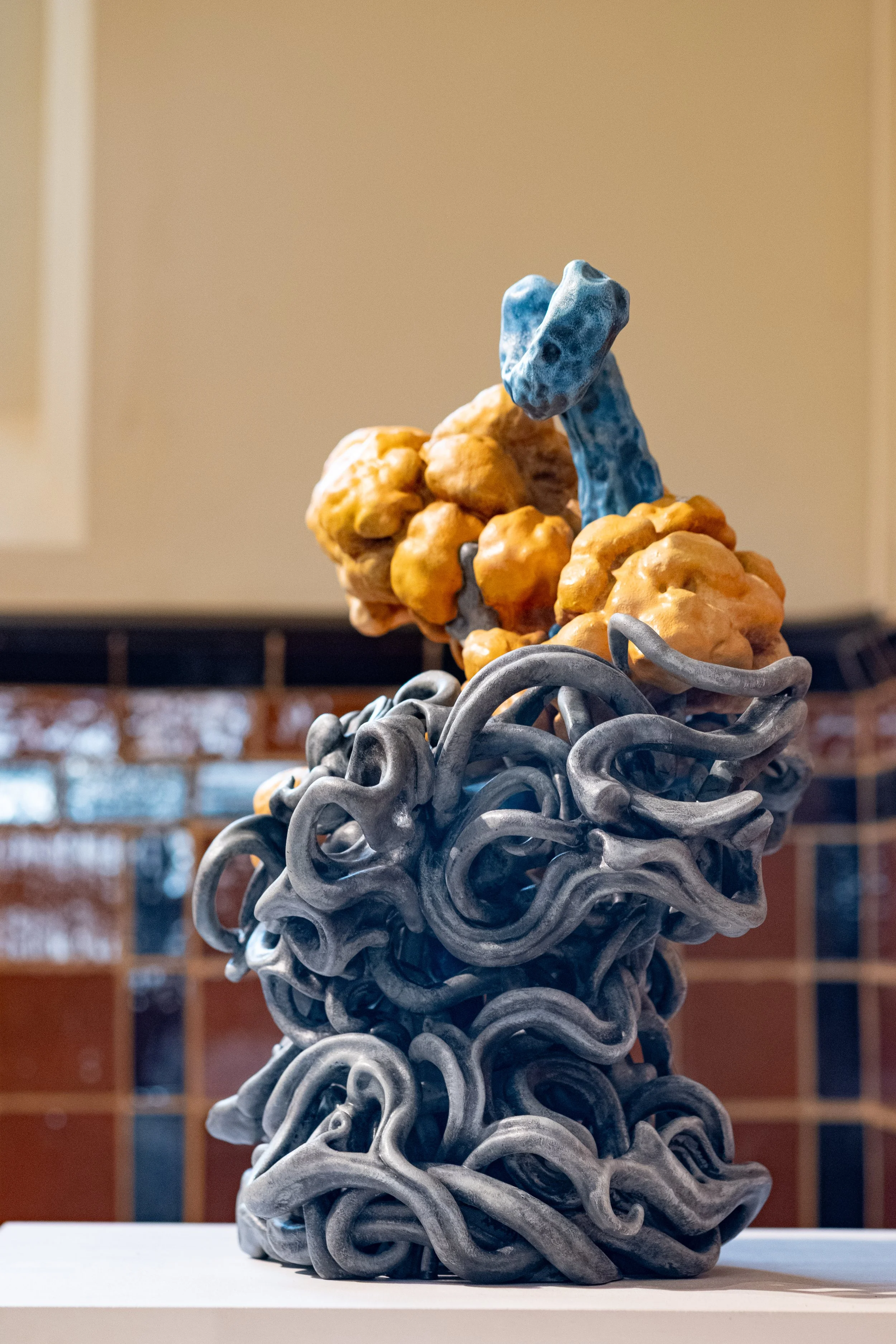
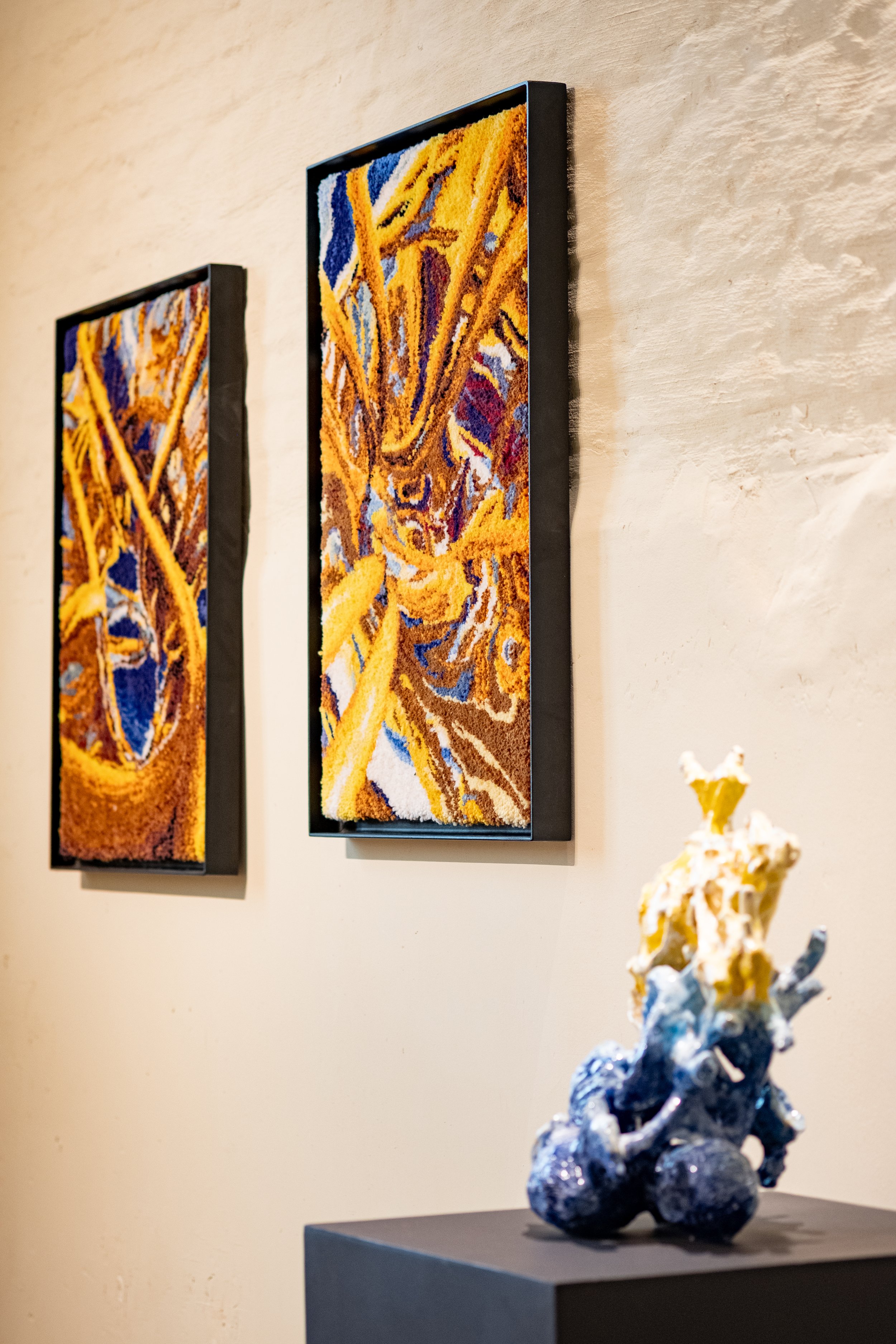
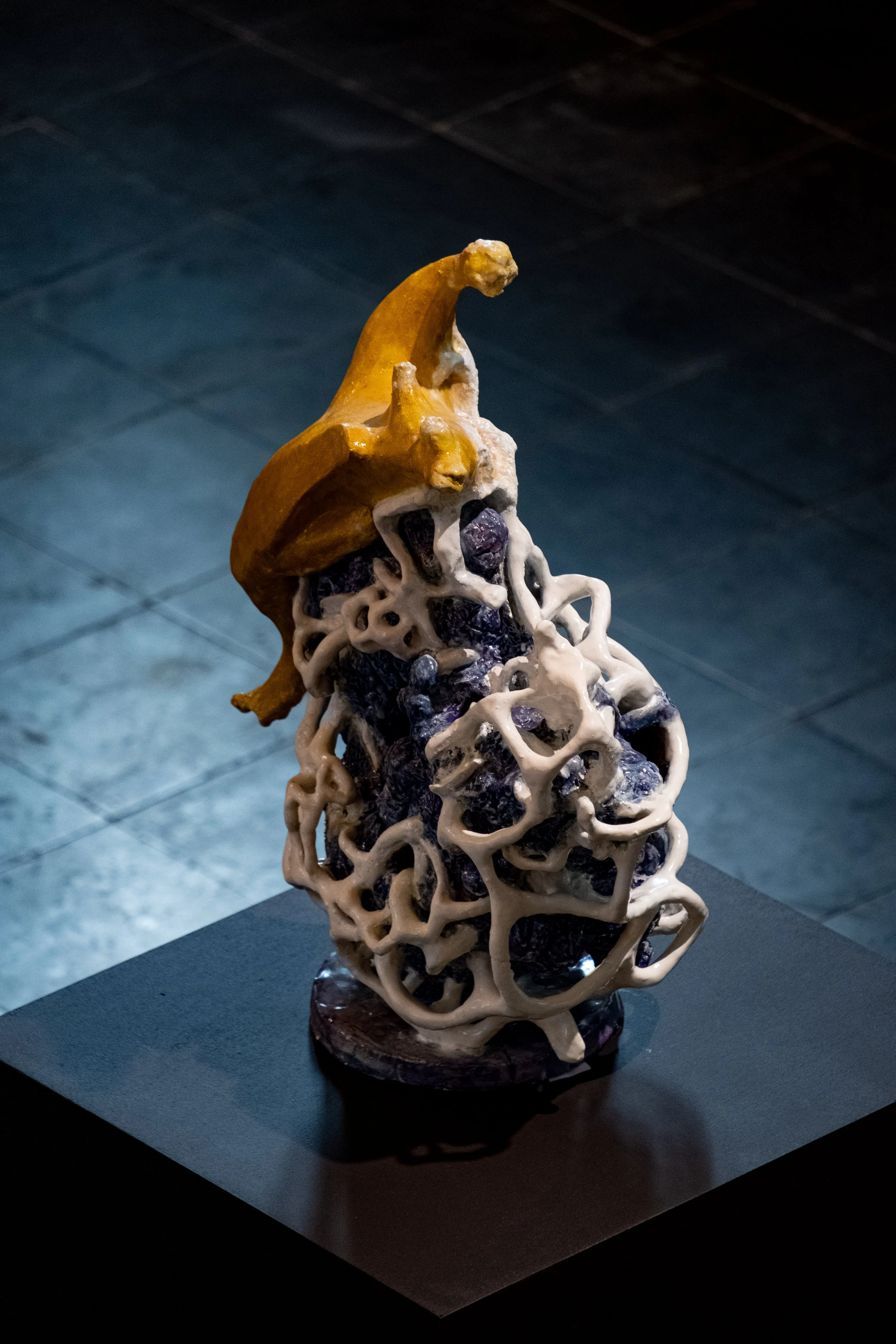
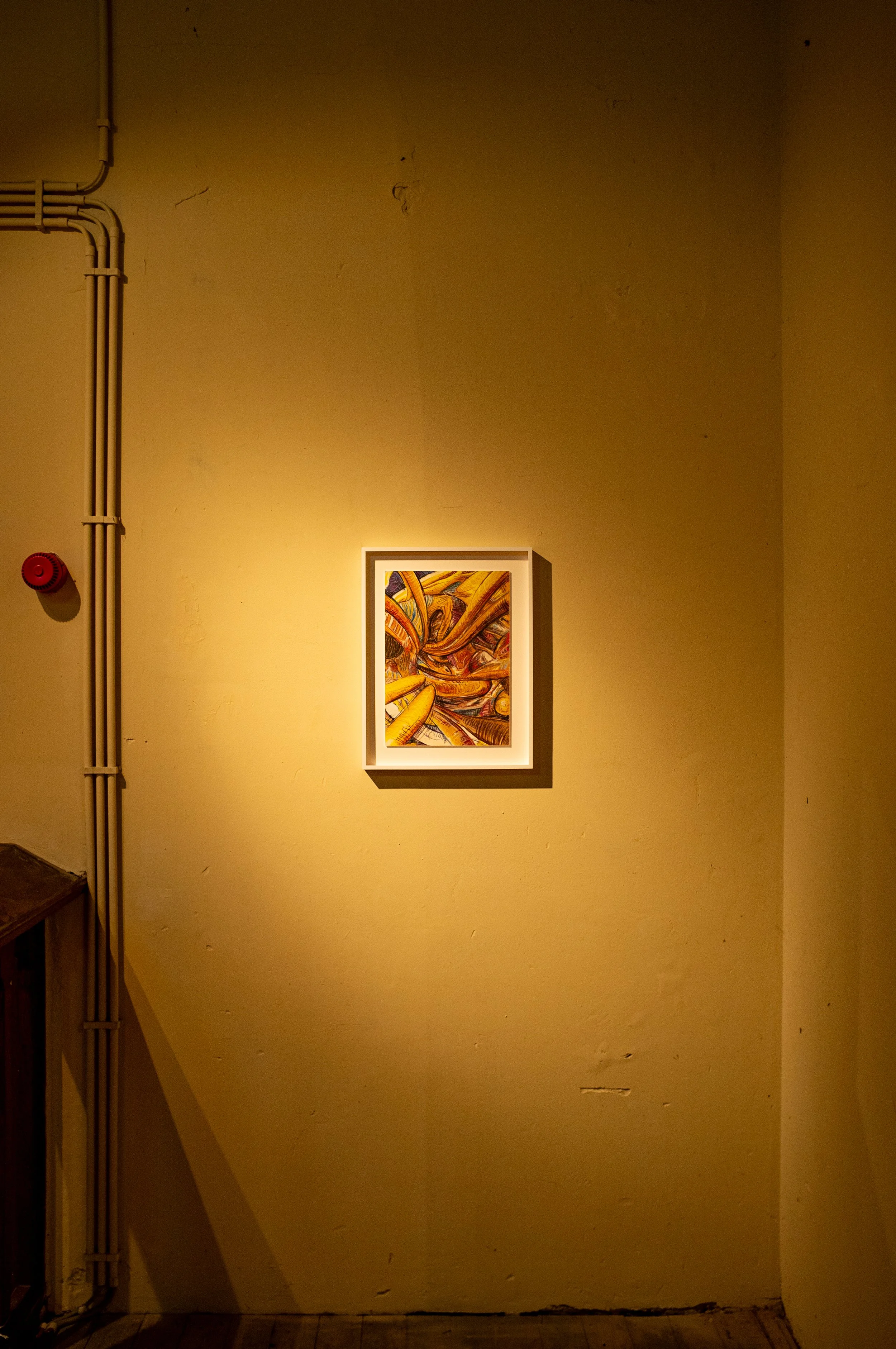
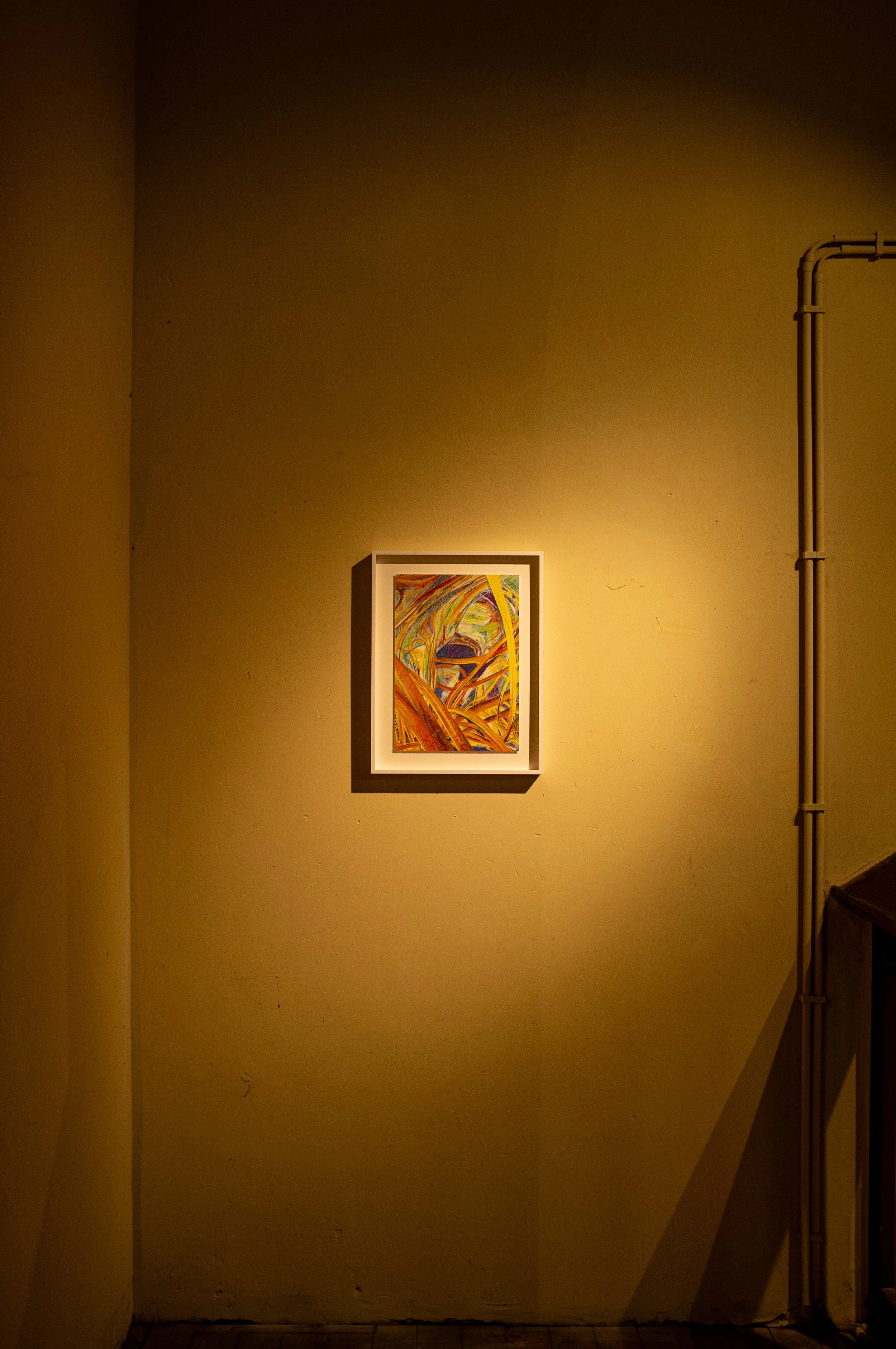
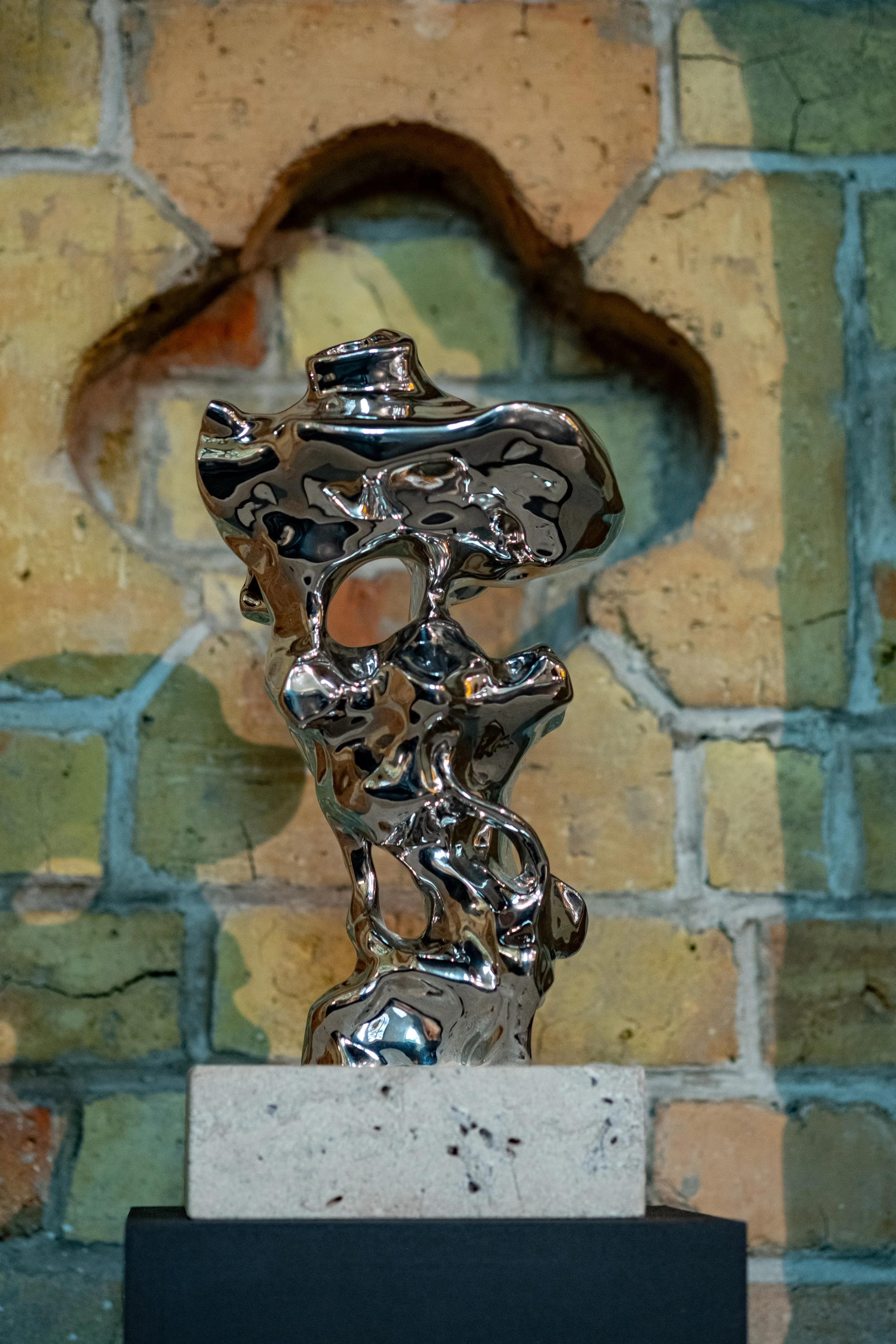
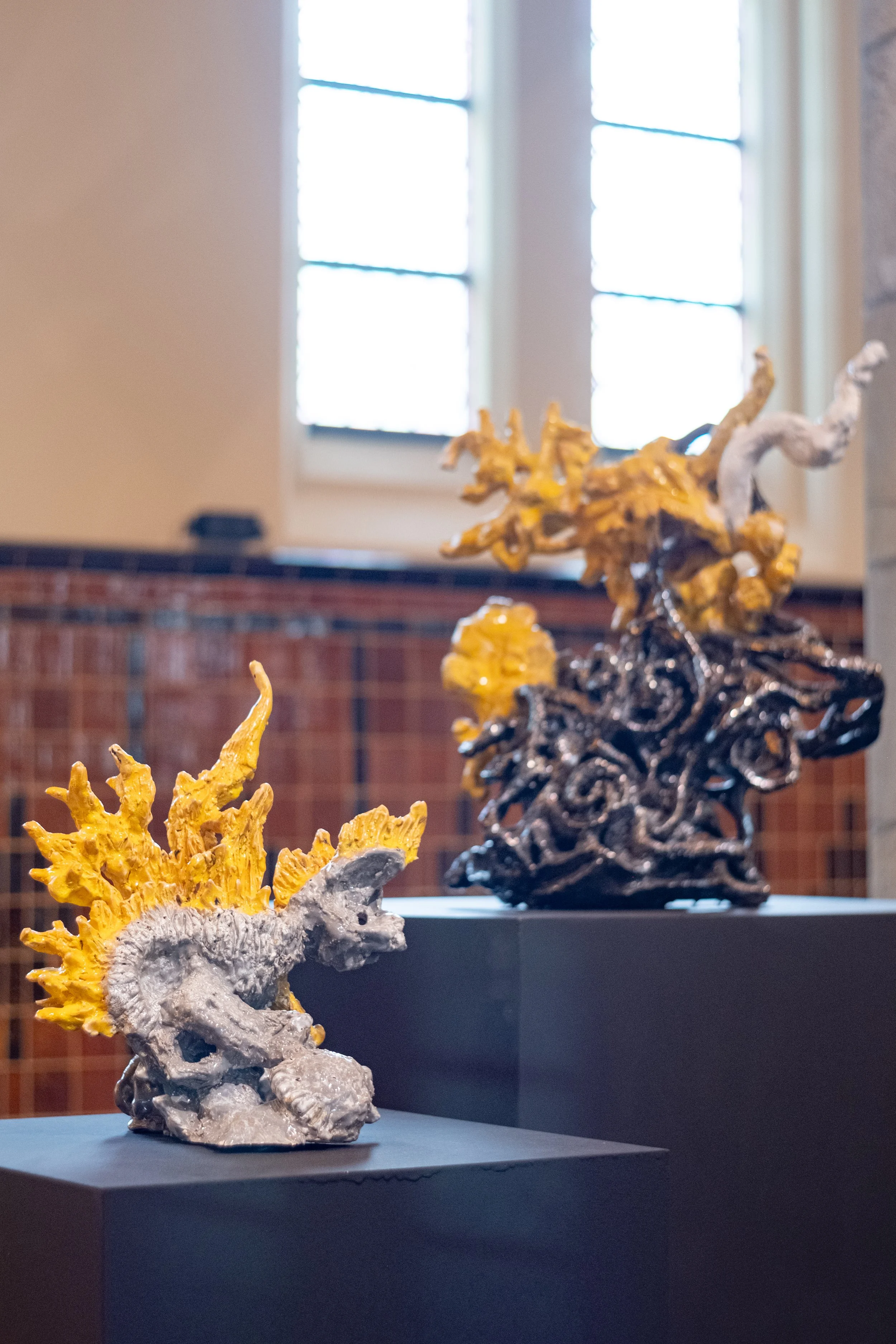
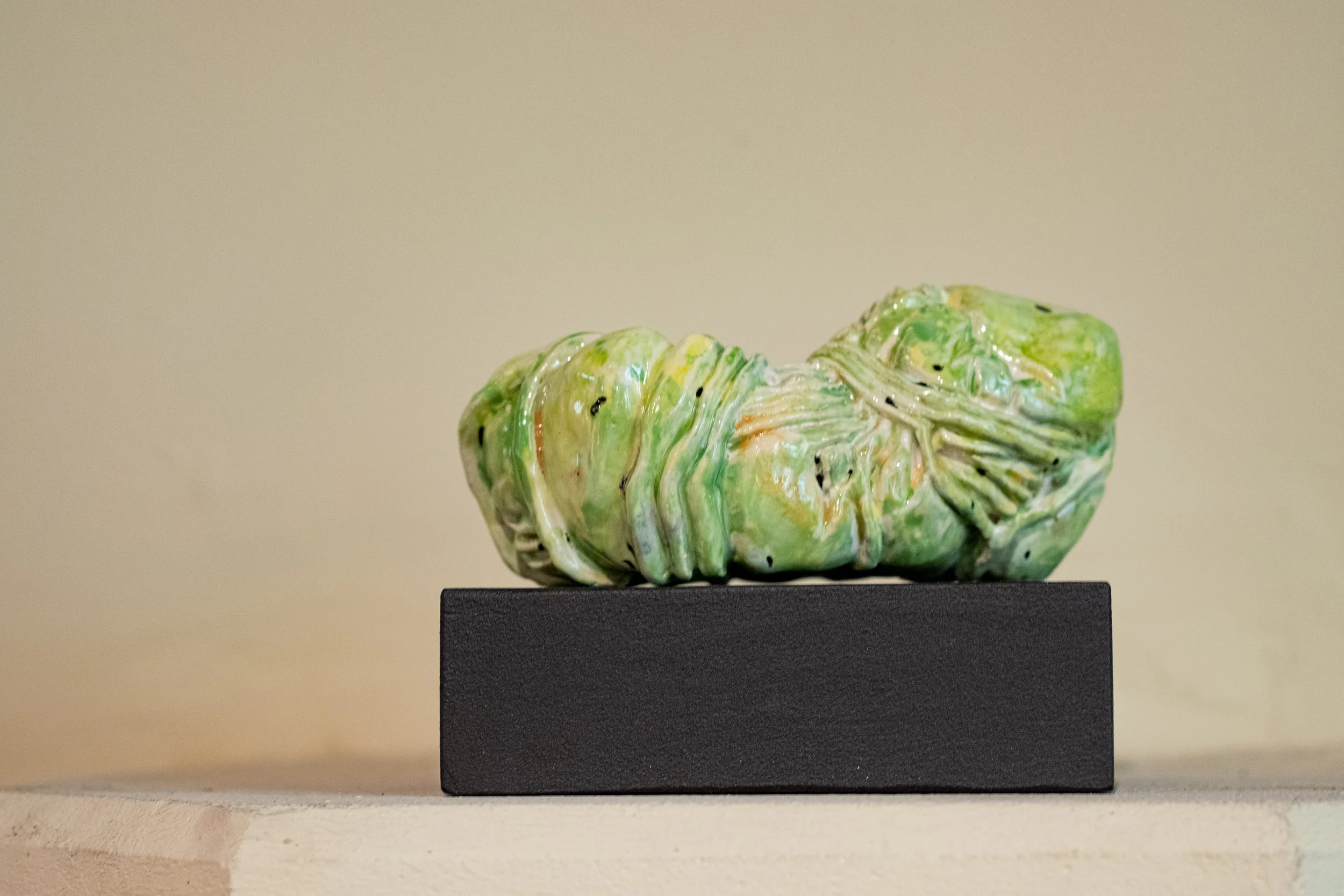
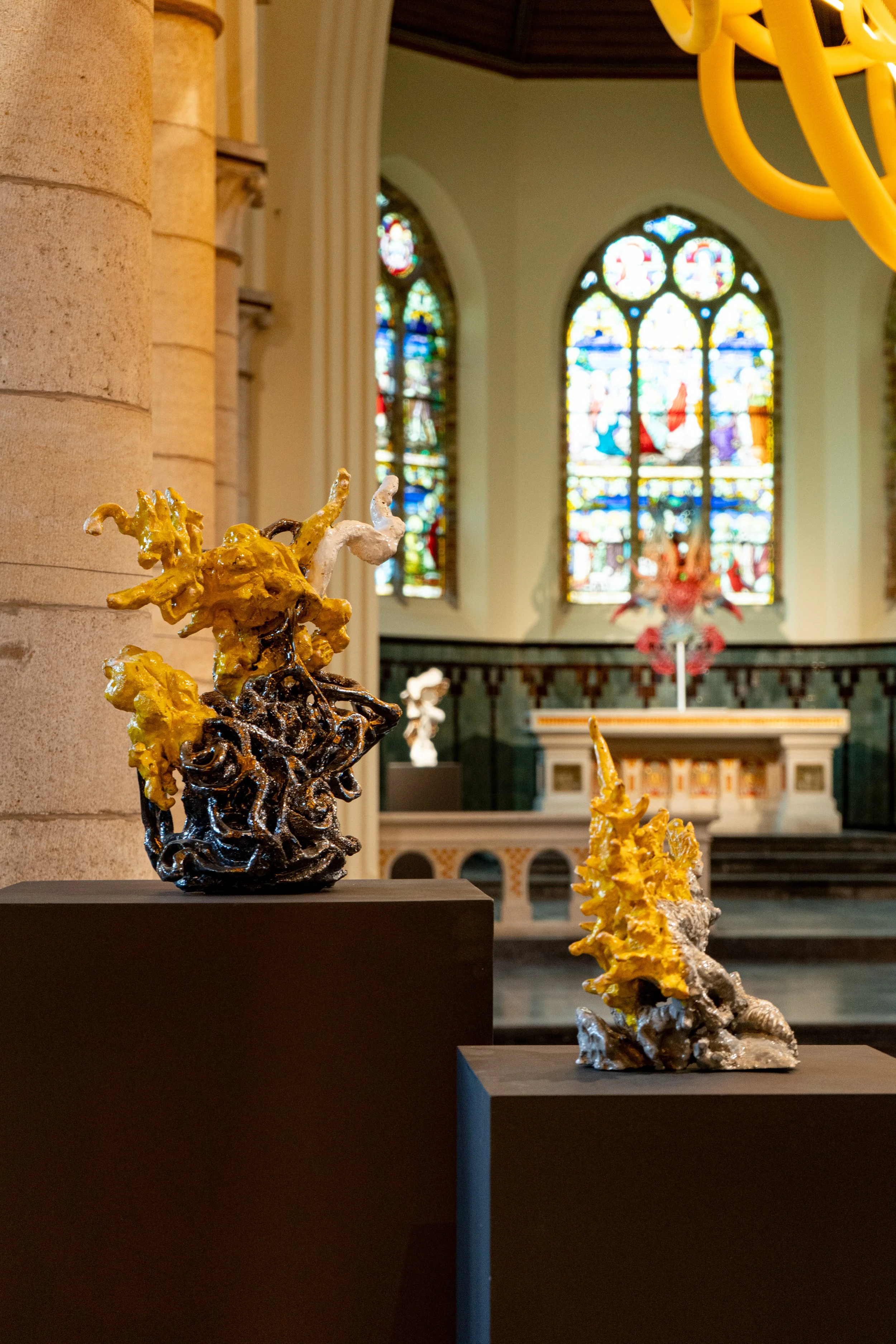
Rond deze installatie verschijnen sculpturen, wandtapijten, tekeningen en keramische werken als echo’s van dezelfde oorsprong. Niet als kopieën, maar als transformaties. Elke materialisatie verandert de oorspronkelijke digitale vorm. In textiel vertraagt de lijn tot ritme en tactiliteit. In keramiek wordt ze kwetsbaar en onvoorspelbaar. In sculptuur krijgt ze massa, schaduw en weerstand. Het materiaal spreekt terug en dwingt de vorm telkens opnieuw te worden.
Misschien gaat deze tentoonstelling uiteindelijk over een wereld in transitie.
Over hoe technologie niet langer buiten ons staat, maar deel is geworden van onze natuur, ons lichaam en ons denken. Over hoe systemen tegelijk verbinden en ontregelen. Over hoe wij als mens voortdurend bewegen tussen controle en chaos, tussen orde en mutatie.
K.E.R.K. wordt zo geen plek om enkel naar kunst te kijken, maar een omgeving waarin je je beweegt.
Een ruimte waarin lijnen denken, materialen reageren en infrastructuren bijna levend worden.
Ik nodig je uit om deze wereld niet alleen te bekijken, maar erdoorheen te wandelen — en misschien even stil te staan bij de netwerken waarvan we vandaag allemaal deel uitmaken.
- Nick Ervinck

K.E.R.K. 2026
ECHOES OF A LINE
In K.E.R.K. 2026 transformeert Nick Ervinck de kerkruimte tot een monumentale sculpturale omgeving waarin lijn, infrastructuur, materie en beweging samenvloeien tot één intense fysieke ervaring. Wat ooit begon als een digitale lijn, een gewichtloze, generatieve structuur die zich autonoom ontwikkelt binnen een virtuele ruimte, wordt hier een tastbaar netwerk dat zich letterlijk vastzet in de architectuur van de kerk en in het lichaam van de bezoeker.
Vanuit de dak- en balkstructuur slingert een monumentaal systeem van felgele drainagebuizen door het schip van de kerk. De lijnen kruisen elkaar, hangen, verdwijnen, ontsporen en hernemen zichzelf in een voortdurend proces van spanning en herconfiguratie. Ze lijken deel uit te maken van een functionele infrastructuur, maar weigeren elke duidelijke logica. Wat zichtbaar wordt, is geen systeem dat oplossingen biedt, maar een sculpturale constellatie die de fragiele structuren blootlegt waarop onze hedendaagse samenleving steunt.
De keuze voor drainagebuizen is betekenisvol. Materialen die normaal verborgen blijven onder de grond, puur functioneel, onzichtbaar en utilitair, worden hier dominant, sculpturaal en bijna agressief aanwezig. Ze dragen geen water, maar spanning. Geen stabiliteit, maar druk. In een wereld waarin digitale, economische en ecologische netwerken steeds meer ons leven bepalen, maakt Ervinck deze onzichtbare structuren voelbaar en fysiek.
Doorheen dit netwerk bewegen losse lijnen, touwen en lichtaccenten die het geheel verder destabiliseren. Waar de buizen verwijzen naar controle, planning en infrastructuur, introduceren deze elementen improvisatie, menselijke frictie en onvoorspelbaarheid. De installatie wordt daardoor geen statisch object, maar een organisme in voortdurende beweging, een systeem dat zichzelf voortdurend herschrijft.
De tentoonstelling sluit nauw aan bij Ervincks bredere artistieke praktijk, waarin vorm ontstaat vanuit een digitale lijn die groeit, vertakt en muteert tot complexe organische structuren. Die digitale oorsprong blijft zichtbaar, maar wordt telkens opnieuw geconfronteerd met de weerstand van materie. Sculpturen, tekeningen, wandtapijten en keramische werken functioneren hier als echo’s van dezelfde oorsprong: geen kopieën, maar transformaties.
Het begrip echo is daarbij cruciaal. Een echo is nooit een exacte reproductie, maar een vervorming die ontstaat door contact met een omgeving. Net zo verandert Ervincks lijn telkens wanneer ze een nieuw materiaal ontmoet. In textiel vertraagt de snelheid van het digitale tot een ritme van draad, arbeid en herhaling. In keramiek krijgt de vorm een kwetsbare, bijna biologische aanwezigheid. In 3D-geprinte sculpturen blijft de relatie met de digitale oorsprong expliciet aanwezig, maar nooit zonder frictie. In elk materiaal krijgt dezelfde vorm een andere temporaliteit, densiteit en betekenis.
Deze voortdurende verschuiving tussen digitaal en materieel situeert Ervincks werk binnen actuele discussies rond post-digitaliteit, material agency en hybride sculptuur. Zijn sculpturen tonen niet langer een tegenstelling tussen technologie en natuur, maar maken zichtbaar hoe beide domeinen vandaag volledig met elkaar verweven zijn. Vorm is bij Ervinck geen eindpunt, maar een proces van voortdurende wording.
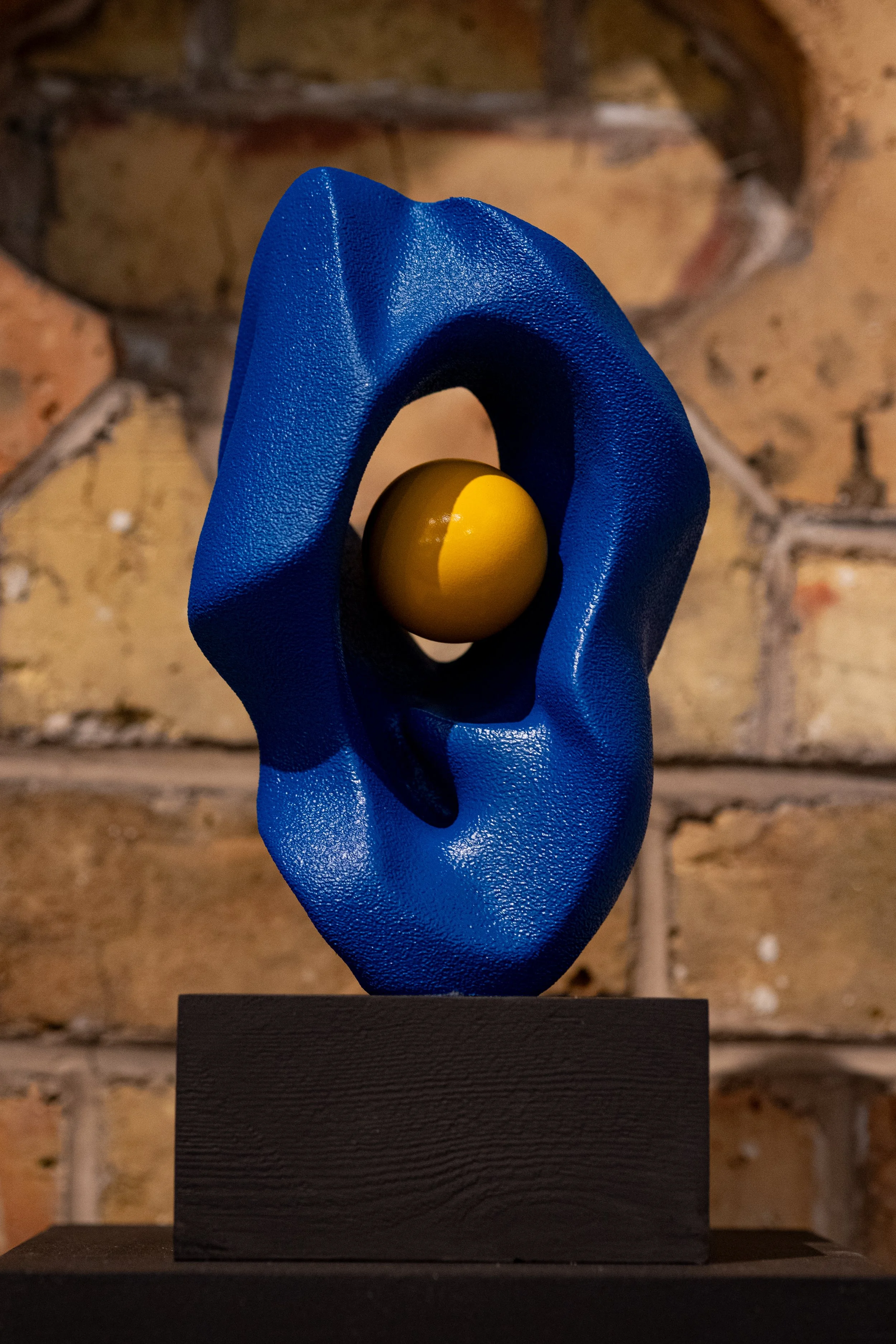
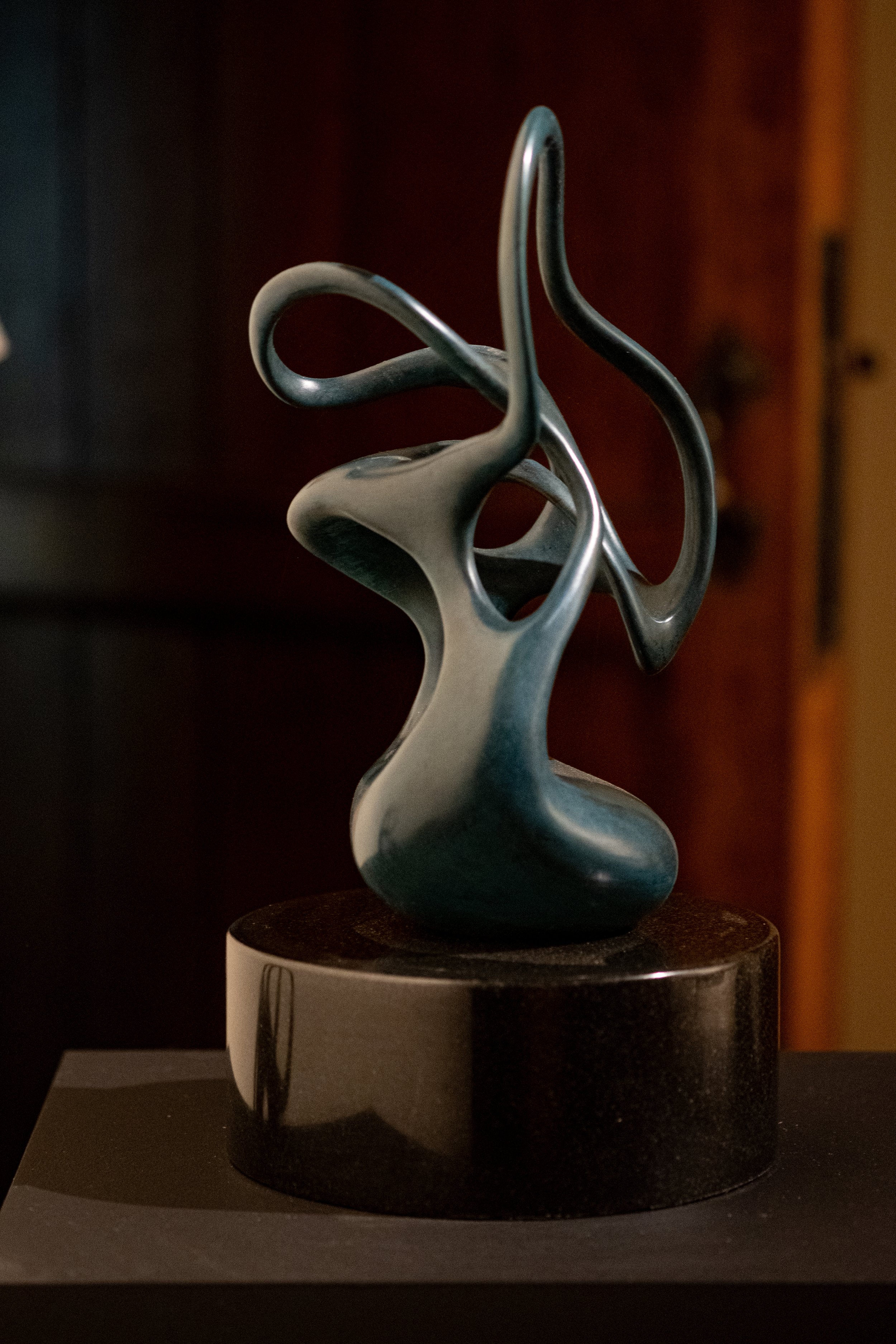
Ook leegte speelt hierin een fundamentele rol. De openingen, holtes en perforaties in zijn sculpturen zijn geen afwezigheden, maar actieve ruimtes die licht, lucht en beweging toelaten. Ze creëren een sculpturale topologie waarin relaties belangrijker worden dan massa. De ruimte tussen de vormen is even betekenisvol als de vorm zelf.
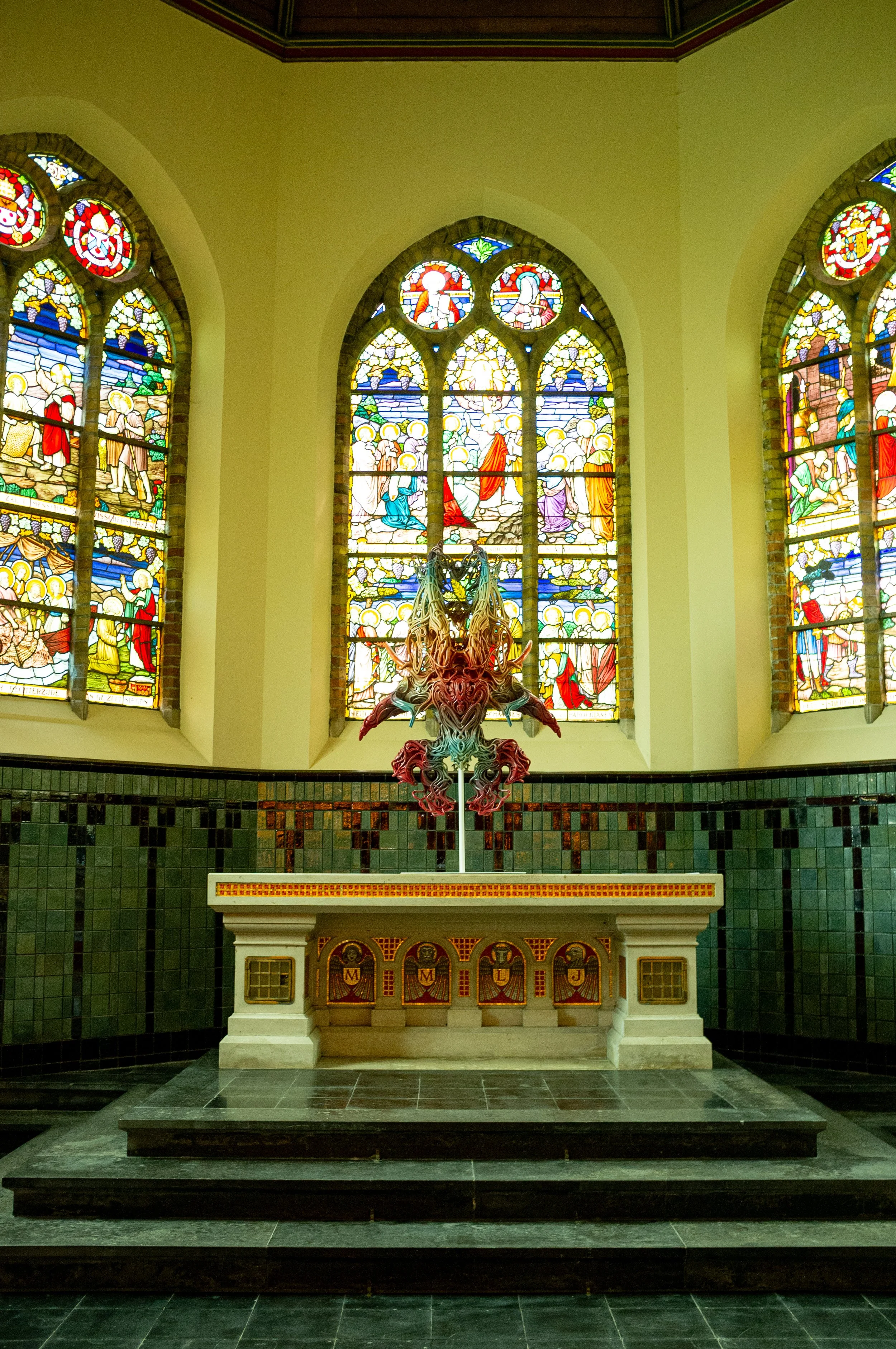
Binnen de sacrale context van K.E.R.K. krijgt deze installatie een bijkomende lading. Waar de kerk historisch een plaats was van orde, spiritualiteit en transcendentie, introduceert Ervinck een hedendaagse infrastructuur van spanning, circulatie en onzekerheid. De bezoeker beweegt niet langer door een neutrale tentoonstellingsruimte, maar door een netwerk dat tegelijk aantrekt, oriënteert en desoriënteert.
ECHOES OF A LINE is daarom geen klassieke tentoonstelling van afzonderlijke objecten, maar een totaalervaring. De ruimte zelf wordt sculptuur. Lijnen gedragen zich als levende structuren. Materialen reageren, verstoren en transformeren. Het werk bevindt zich niet tegenover de bezoeker, maar rondom hem.
Je kijkt niet naar deze tentoonstelling.
Je beweegt erdoorheen.
- Freddy Decreus
FOREWORD
The church space of K.E.R.K. has never been a neutral exhibition site for me.
It carries history, symbolism, silence, and collective memory within it. Every intervention I create here is therefore not only about sculpture, but also about the tension between centuries-old architecture and the world we live in today.
For this edition, I begin with the line.
The most elementary form of drawing, thinking, and constructing. A line can connect, organize, and structure, but it can also derail, mutate, and generate resistance. In my practice, this line originates digitally: as a growing trace without gravity, without material, without limitation. But in K.E.R.K., that same line becomes physical. It crawls through the space, hangs above the visitor’s head, and transforms the architecture into a network of tensions and connections.
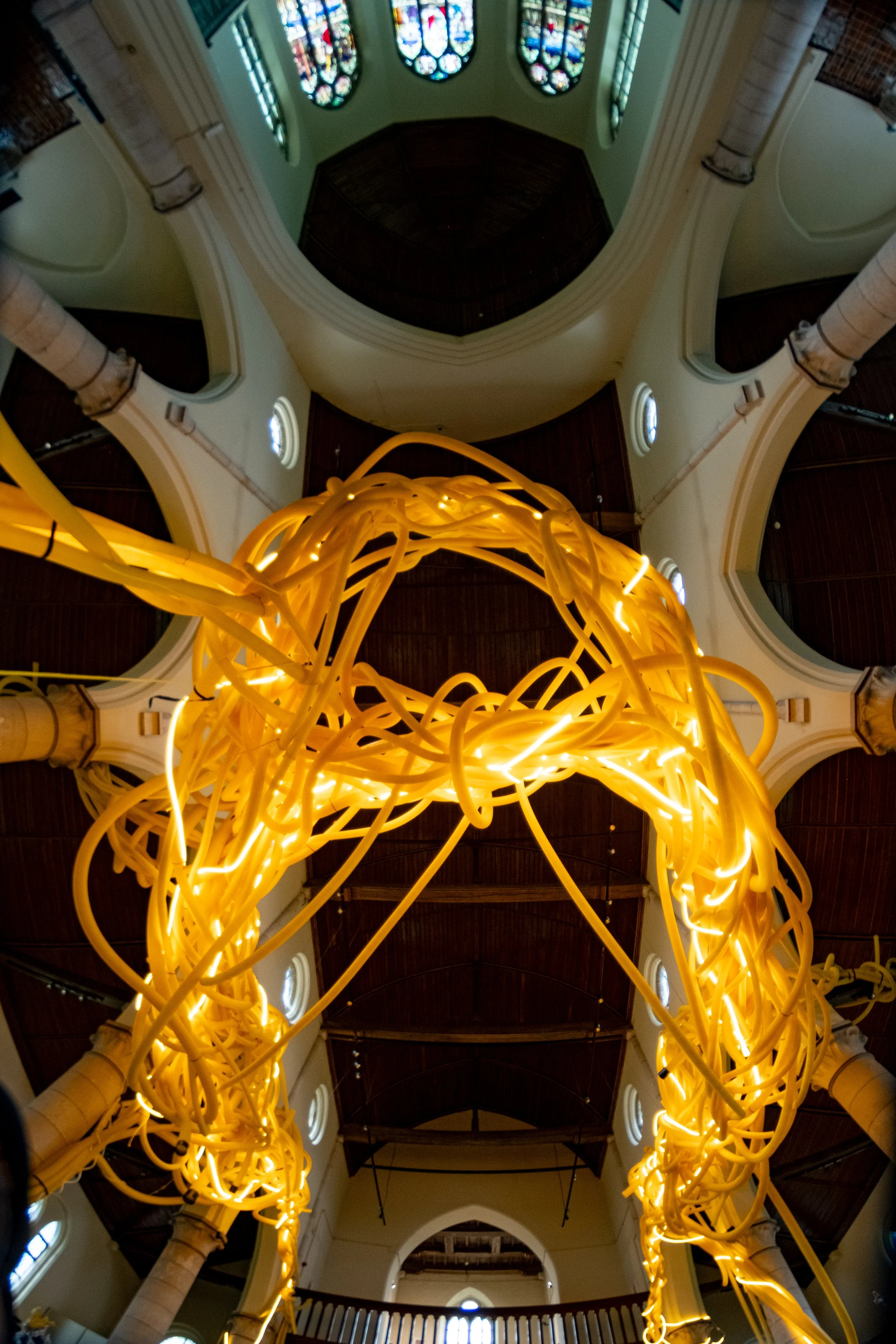
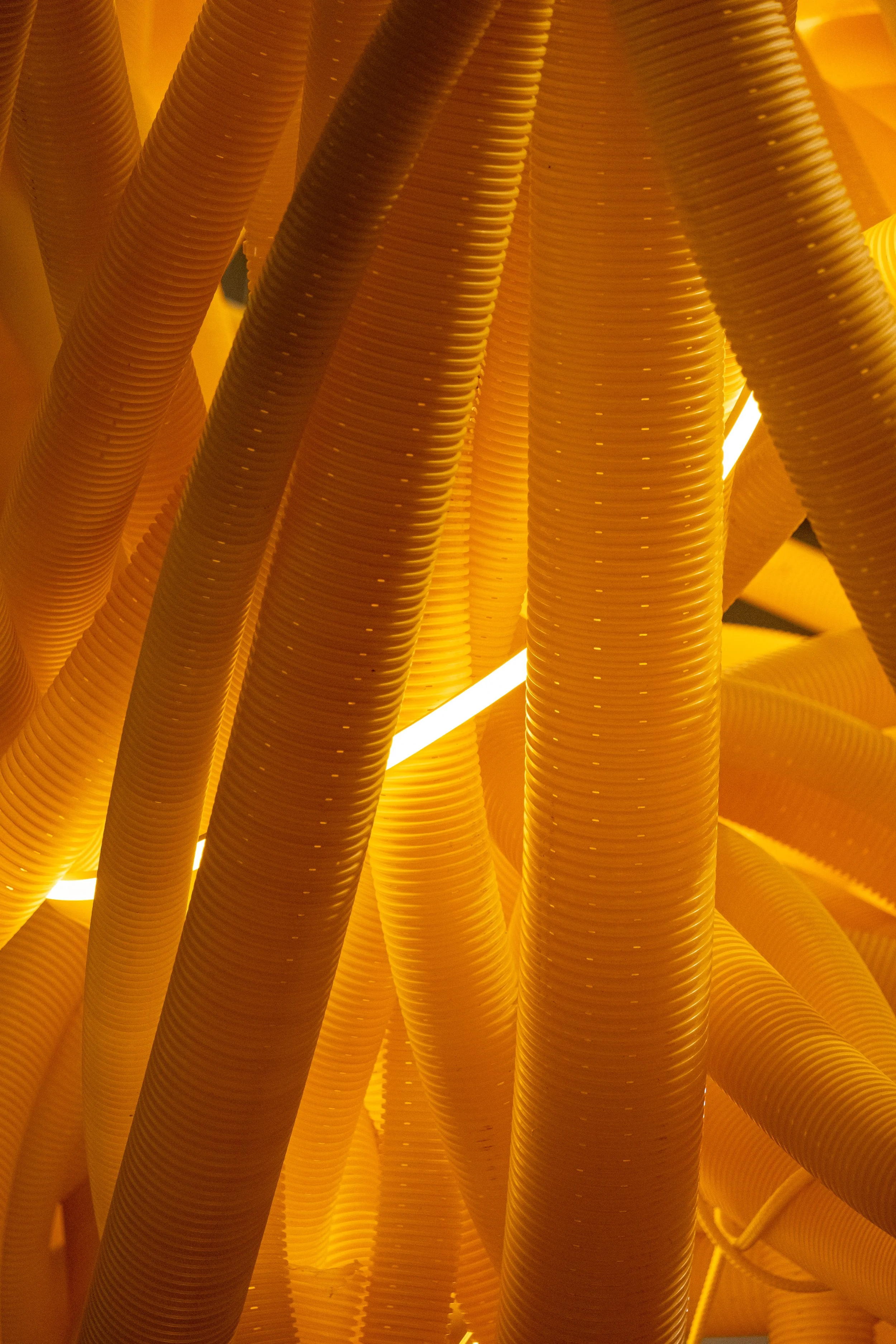
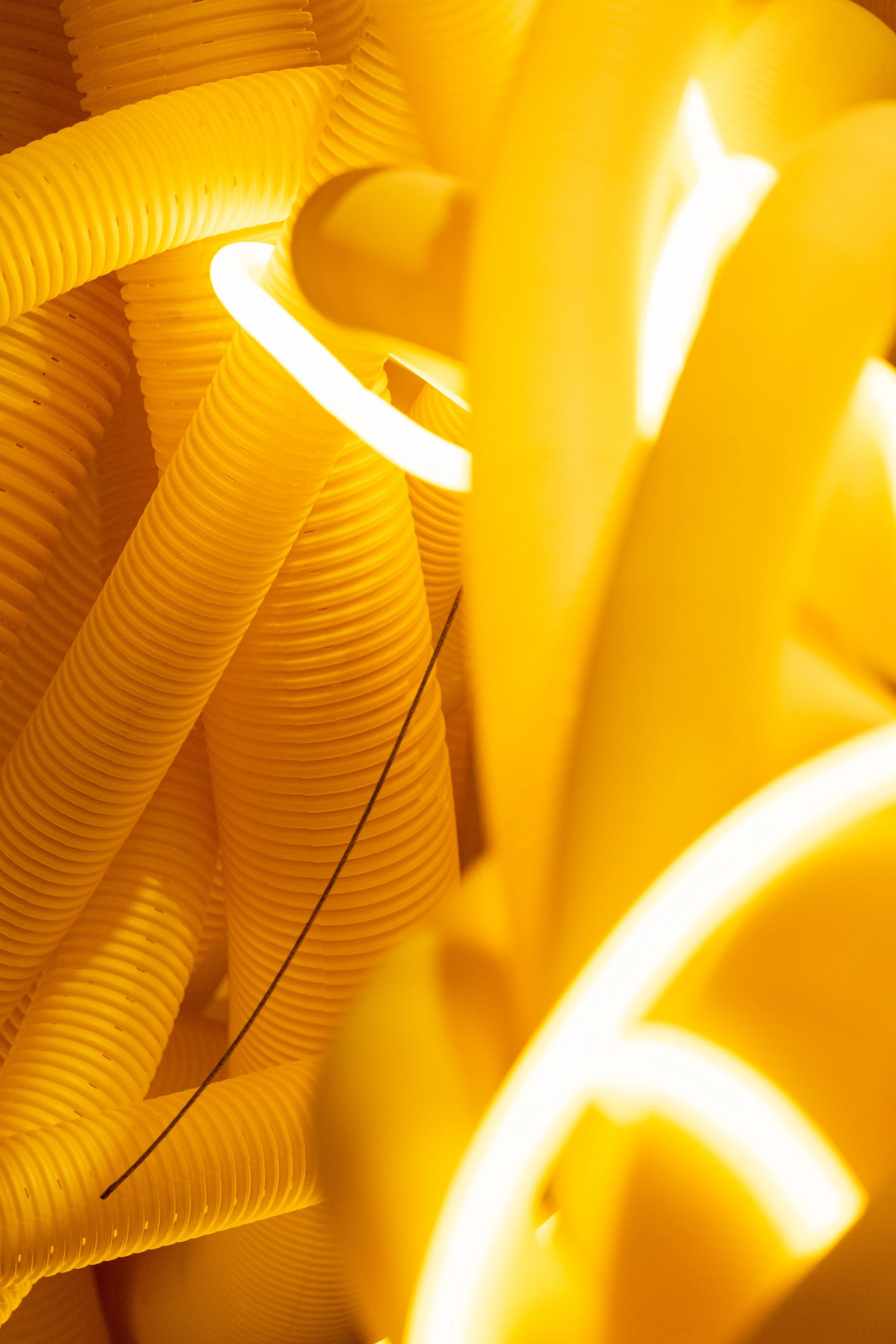
The monumental installation of yellow drainage pipes forms the heart of this exhibition.
These are materials that normally remain hidden underground — purely functional, intended to drain water and keep systems running. Here, they become visible, sculptural, and even dominantly present. They resemble infrastructure, yet ultimately refuse any clear logic. What emerges is not a closed system, but a landscape of movement, friction, and uncertainty.
That tension fascinates me.
Today, we live in a world entirely sustained by networks: digital systems, economic structures, ecological chains, algorithms, and data. They organize our lives, yet largely remain invisible. With Echoes of a Line, I want to make these underlying structures tangible. Not as an illustration of technology, but as a physical experience in which the visitor must literally position themselves in relation to lines, pressure, complexity, and loss of control.
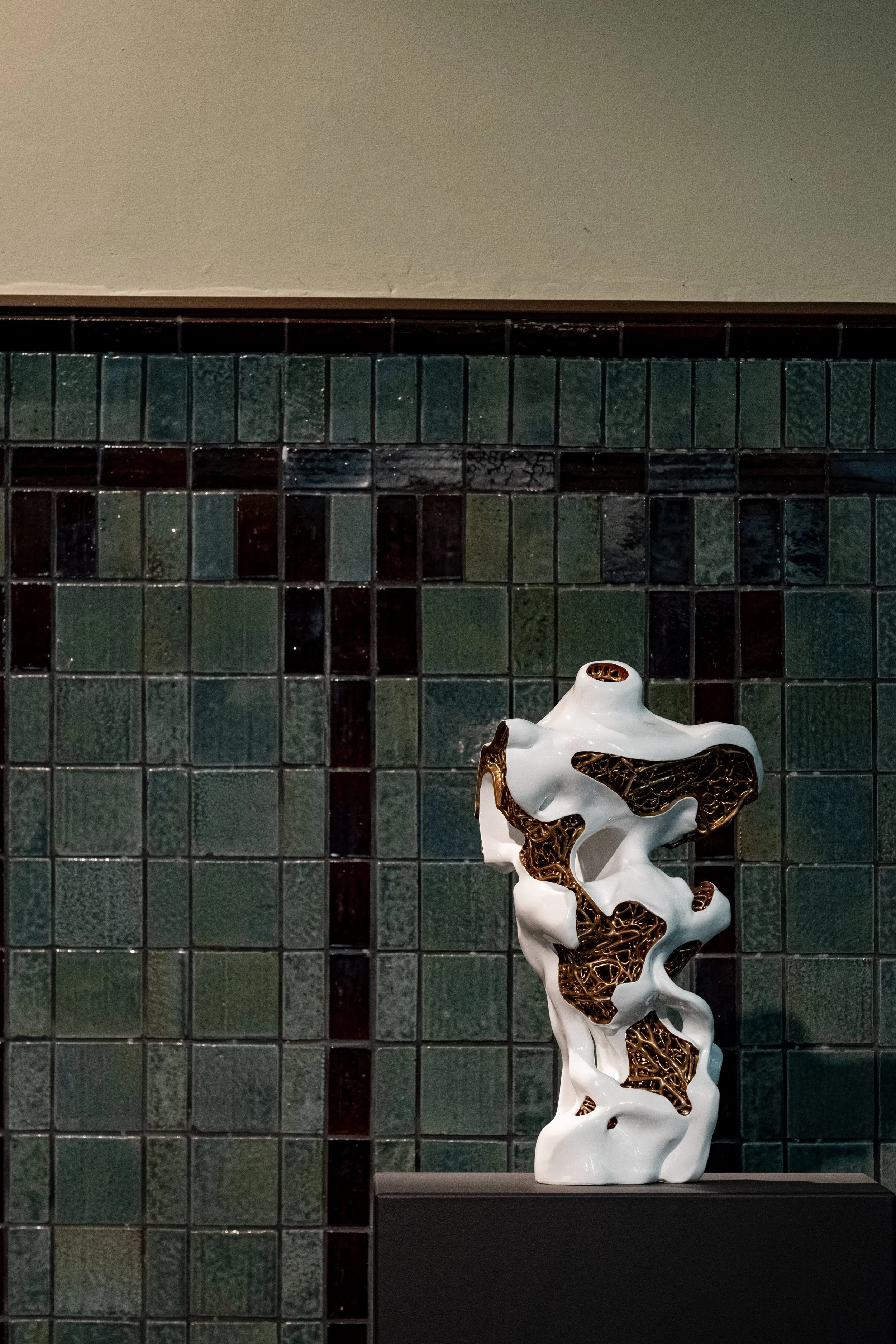
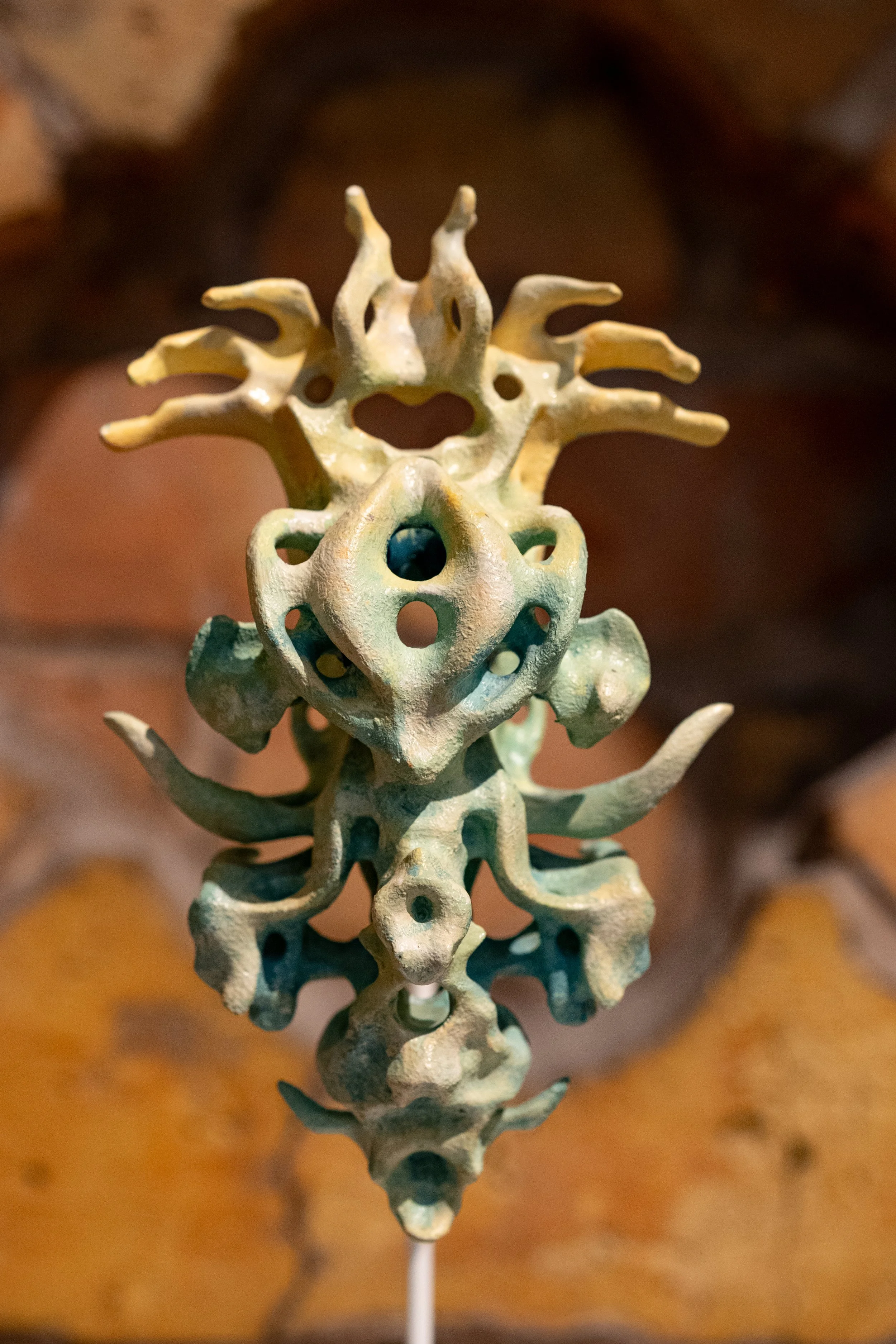
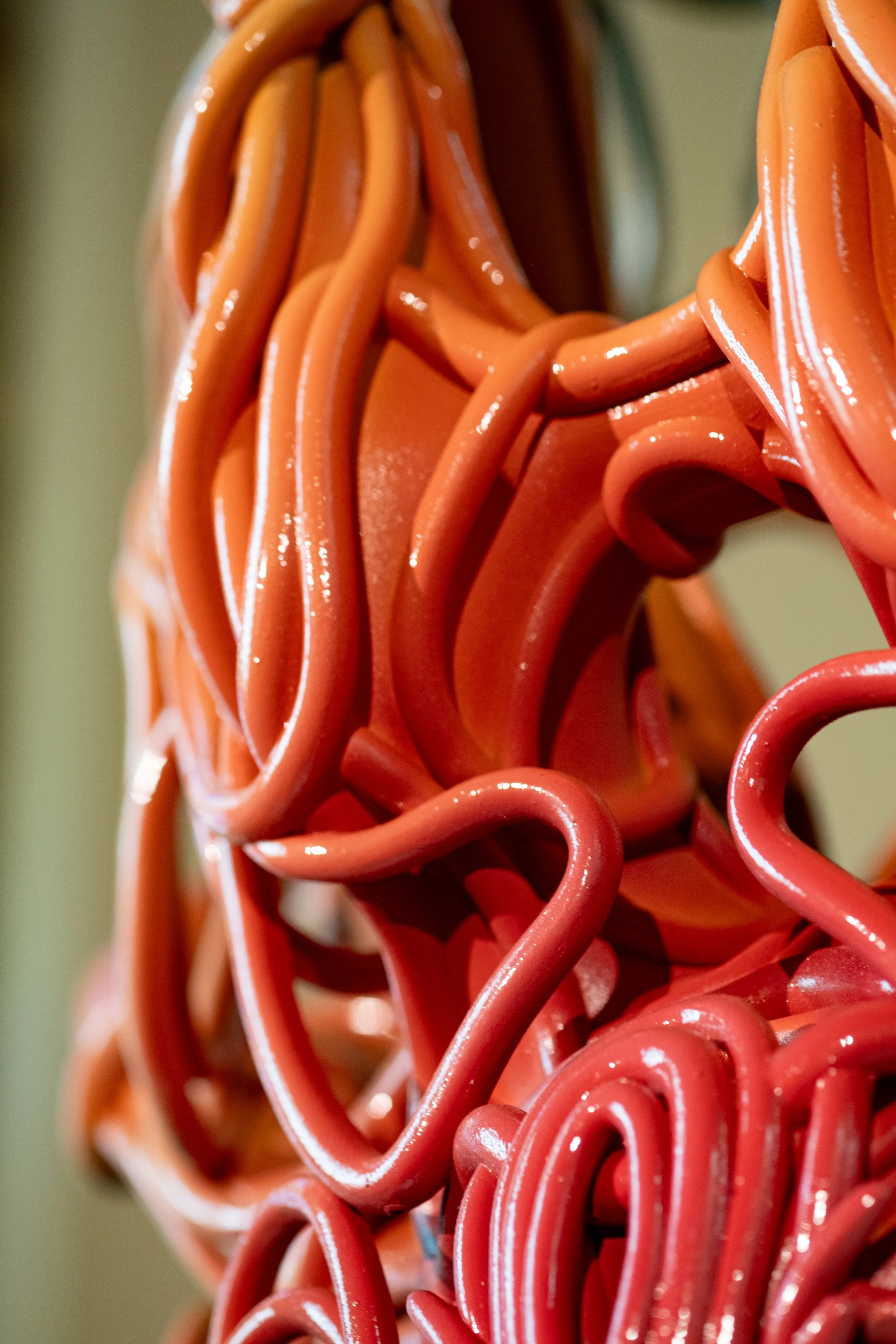
Around this installation, sculptures, tapestries, drawings, and ceramic works appear as echoes of the same origin. Not as copies, but as transformations. Each materialization alters the original digital form. In textiles, the line slows into rhythm and tactility. In ceramics, it becomes fragile and unpredictable. In sculpture, it acquires mass, shadow, and resistance. The material speaks back and continuously forces the form to become something new.
Perhaps this exhibition is ultimately about a world in transition.
About how technology no longer exists outside of us, but has become part of our nature, our bodies, and our thinking. About how systems simultaneously connect and disrupt. About how we, as human beings, constantly move between control and chaos, between order and mutation.
K.E.R.K. thus becomes not merely a place to look at art, but an environment through which you move.
A space in which lines think, materials react, and infrastructures become almost alive.
I invite you not only to observe this world, but to walk through it — and perhaps pause for a moment to reflect on the networks of which we are all part today.
-Nick Ervinck


K.E.R.K. 2026
ECHOES OF A LINE
In K.E.R.K. 2026, Nick Ervinck transforms the church space into a monumental sculptural environment in which line, infrastructure, matter, and movement merge into one intense physical experience. What once began as a digital line — a weightless, generative structure developing autonomously within a virtual space — becomes here a tangible network that literally anchors itself within the architecture of the church and within the body of the visitor.
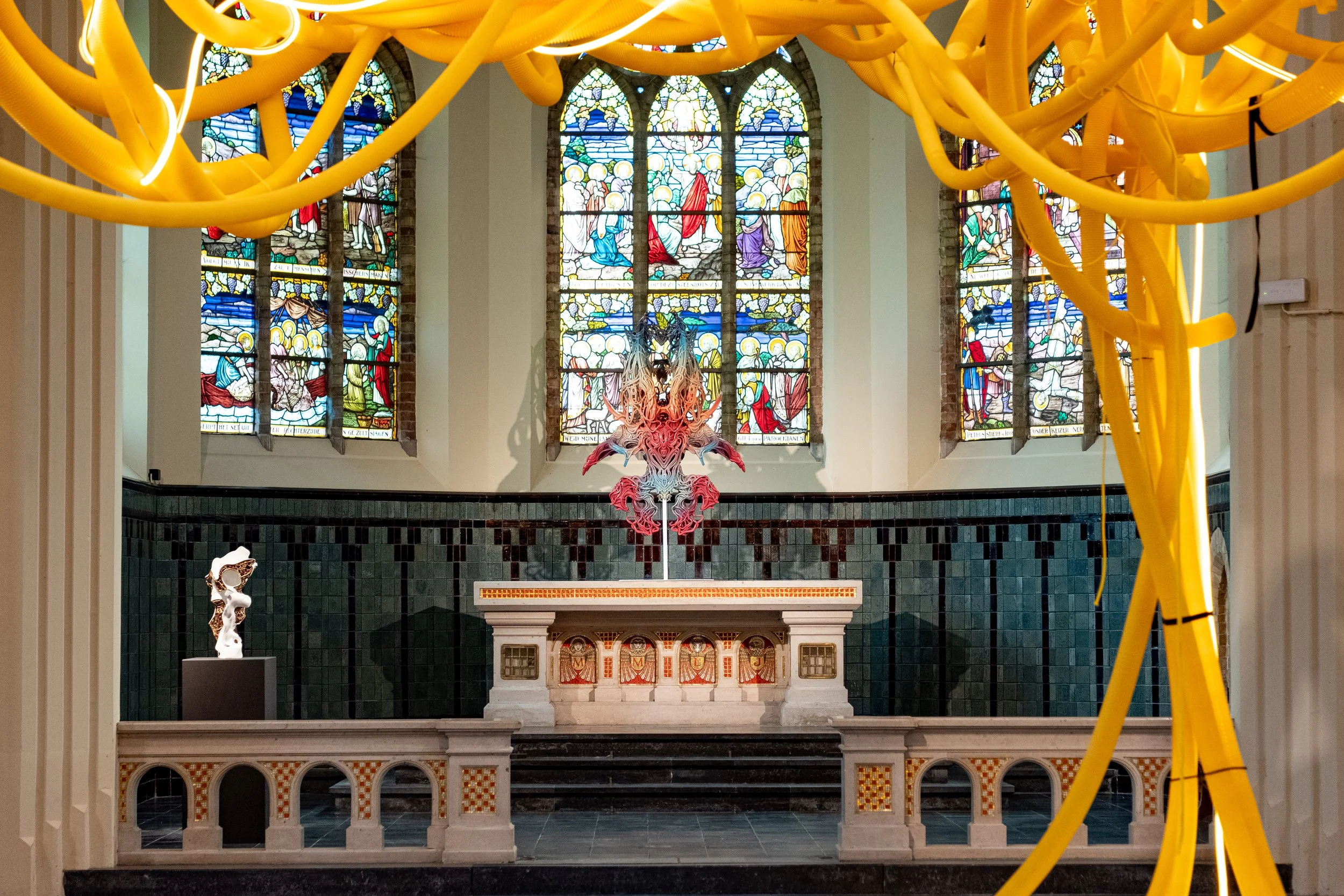
From the roof and beam structure, a monumental system of bright yellow drainage pipes winds through the nave of the church. The lines intersect, hang, disappear, derail, and reconnect in a continuous process of tension and reconfiguration. They appear to be part of a functional infrastructure, yet refuse any clear logic. What becomes visible is not a system offering solutions, but a sculptural constellation exposing the fragile structures upon which our contemporary society depends.
The choice of drainage pipes is significant. Materials that normally remain hidden underground — purely functional, invisible, and utilitarian — become here dominant, sculptural, and almost aggressively present. They carry no water, but tension. No stability, but pressure. In a world where digital, economic, and ecological networks increasingly shape our lives, Ervinck makes these invisible structures tangible and physical.
Throughout this network move loose lines, ropes, and accents of light that further destabilize the whole. While the pipes refer to control, planning, and infrastructure, these elements introduce improvisation, human friction, and unpredictability. As a result, the installation becomes not a static object, but an organism in constant motion — a system continuously rewriting itself.
The exhibition closely connects to Ervinck’s broader artistic practice, in which form emerges from a digital line that grows, branches, and mutates into complex organic structures. That digital origin remains visible, yet is repeatedly confronted with the resistance of matter. Sculptures, drawings, tapestries, and ceramic works function here as echoes of the same origin: not copies, but transformations.
The concept of echo is crucial in this context. An echo is never an exact reproduction, but a distortion produced through contact with an environment. In the same way, Ervinck’s line changes each time it encounters a new material. In textiles, the speed of the digital slows into a rhythm of thread, labor, and repetition. In ceramics, form acquires a fragile, almost biological presence. In 3D-printed sculptures, the relationship to the digital origin remains explicitly present, but never without friction. In every material, the same form acquires a different temporality, density, and meaning.
This constant shift between the digital and the material situates Ervinck’s work within contemporary discussions surrounding post-digitality, material agency, and hybrid sculpture. His sculptures no longer present a contradiction between technology and nature, but reveal how both domains are now completely intertwined. For Ervinck, form is not an endpoint, but a process of continuous becoming.
Emptiness also plays a fundamental role within this practice. The openings, cavities, and perforations in his sculptures are not absences, but active spaces that allow light, air, and movement to enter. They create a sculptural topology in which relationships become more important than mass. The space between forms is as meaningful as the form itself.
Within the sacred context of K.E.R.K., this installation acquires an additional layer of meaning. Where the church historically functioned as a place of order, spirituality, and transcendence, Ervinck introduces a contemporary infrastructure of tension, circulation, and uncertainty. The visitor no longer moves through a neutral exhibition space, but through a network that simultaneously attracts, orients, and disorients.
ECHOES OF A LINE is therefore not a conventional exhibition of separate objects, but a total experience. The space itself becomes sculpture. Lines behave like living structures. Materials react, disrupt, and transform. The work does not stand opposite the visitor, but surrounds them.
You do not look at this exhibition.
You move through it.
- Freddy Decreus
GNI-RI JUL2026: ECHOES OF A LINE BROCHURE
Credits
Nick Ervinck GNI-RI jun 2026, Kunsthalle ERvincK, Sint Pieters Kapelle Middelkerke - B